Latviešu Centrs Garezers vīzija
Izveidot dinamisku kultūras centru, kur latviskais mantojums mūs iedvesmo un vieno.
Garezers turpina izveidoties kā kultūras centrs, kur visa gada garumā tiek godināt latviešu valoda, tradīcijas un ticība. Mūsu programmas veicina ilgstošas draudzības, kuras sākas bērnībā un turpinās ilgi. Dzīvei attīstoties, centrs kļūst par vidi ģimenes sapulcēm, draudzību stiprināšanai un jaunu kontaktu veidošanai. Mākslinieku, mūziķu, aktieru, filozofu, politiķu, akadēmiķu un reliģisko līderu dalīšanās ar savu ticību, zināšanām un darbu padara Garezeru par centrālu sanākšanās vietu mūsu kopienai. Tieši caur šādu kopīgu pieredzi saprotam, ko nozīmē būt vienotiem latviskajā garā.
Latvian Center Garezers Vision
To create a vibrant cultural hub where people are inspired and united through Latvian heritage.
We envision Garezers as a center of culture where the Latvian language, traditions, and faith are celebrated throughout the year. During childhood, it’s a place where lasting friendships begin, fostered by our programs. As life progresses, it becomes a haven for family gatherings, reconnecting with old friends, and creating new bonds. The presence of religious leaders, artists, musicians, actors, philosophers, politicians, and academics who come to share their faith, knowledge, and work creates a focal point for our community. It is through these shared experiences that we come to understand what it means to be united by the Latvian spirit.
Latviešu Centrs Garezers misija
Stiprināt latviešu valodu, kultūru un garīgās vērtības un nodrošināt vietu, kur varam turpināt veidot iekļaujošu kopienu visiem, kas augstu vērtē latvisko identitāti.
Mēs realizēsim savu vīziju, nodrošinot izglītību, kultūras pieredzi un vidi ticībā balstītai attīstībai. Mēs veidosim kopienu, kurā visi tie, kuriem interesē latviešu kultūra, jūtas gaidīti un tiek dota iespēja iepazīt savu, savu ģimenes locekļu vai tuvinieku kultūras mantojumu.
Latvian Center Garezers Mission
To strengthen the Latvian language, culture, and spiritual values and provide a place to build an inclusive community for all who value the Latvian identity.
We will realize our vision by providing educational instruction, cultural experiences, and a nurturing environment for faith-based development. We will build a community where all who are interested in the Latvian culture feel welcome and are provided the opportunity to learn about their friends, family members, or loved ones heritage.
Latvian Center Garezers, Inc. is a registered nonprofit organization recognized as tax-exempt under Section 501(c)(3) of the Internal Revenue Code. Donations to Latvian Center Garezers are tax-deductible to the extent allowed by law.
As a nonprofit organization, Garezers relies on program participation, donations, volunteer support, and community involvement to continue providing Latvian cultural, educational, religious and community programs for current and future generations.


Informācija / Information
Friends of Garezers, Inc
9034 shares
Karlis Vizulis
Latvian Assoc. Daugavas Vanagi ASV Inc.
5194 shares
Gunars Kancs
Latvian Ev. Luth. Holy Trinity Church in Milwaukee
1609 shares
Andrejs Junge
Latvian Lutheran Church of Indianapolis
837 shares
Andrejs Kancs
Chicago Latvian Ev. Lutheran Zion Church
837 shares
Martins Staks
Latvian Ev. Luth. United Church of Kalamazoo
639 shares
Anita Grivins
Daugavas Vanagi Assoc. of Milwaukee, Inc.
477 shares
Vincents Dindzans
LELBA
462 shares
Anita Varsbergs-Paza
Latvian Welfare Assoc Daugavas Vanagi of Cleveland
330 shares
Ilze Hazners
Latvian Association of Cleveland
321 shares
Haralds Mazzarins
The Latvian Choir Assoc. USA
319 shares
Ernests Brusubardis
St. Peter’s Latvian Ev. Lutheran Church
268 shares
Ivars Spalis
United Latvian Ev. Luth. Church of Lincoln
239 shares
Karlis Indriksons
American Latvian Youth Assoc.
227 shares
Mara Giga
American Latvian Association
171 shares
Martins Andersons
St Paul’s Latvian Ev. Luth. Church in Detroit
168 shares
Guntars Grivins
United Latvian Ev. Luth. Church of Cleveland
156 shares
Vilnis Kubulins
Latvian Ev. Luth. Church of Grand Rapids
154 shares
Ivars Petrovskis
Latvian Relief Fund of America, Inc.
150 shares
Gunars Berzins
Lansings Latvian Lutheran Church
128 shares
Edvards Hess
Latvian Welfare Assoc. of Illinois, Inc.
128 shares
Martins Staks
Latvian Ev. Luth. Church of Minneapolis & St. Paul
123 shares
Arnolds Ozols
Latvian Medical and Dental Assoc., Inc.
108 shares
Juris Lazovskis
Latvian Ev. Lutheran Church of Saginaw
102 shares
Linda Paeglis
Latvian Ev. Luth. United Church of Kalamazoo Ladies Aux.
102 shares
Dace Copeland
Latvia Subdivision Owners Assoc., Inc.
100 shares
Marks Baginskis
Wisconsin Latvian Cultural Foundation, Inc.
100 shares
Peteris Burgelis
Latvian Relief Association of Nebraska
91 shares
Astra Iesalnieks
Sorority Daugaviete
78 shares
Mara Lazda
Iowa Latvian Ev. Luth. Congregation
62 shares
Voldemars Pelds
Latvian Ev. Lutheran Church of Wilmington
61 shares
Ruta Ore
Fraternity Beveronija
55 shares
Juris Meisters
Latvian Welfare Association DV of Detroit
55 shares
Roberts Kukainis
Latvian Ev. Lutheran Church of Dayton, OH
52 shares
Anda Diaz
Latvian Welfare Association of Des Moines
48 shares
Andris Kirsis
Latvian Ev. Lutheran Church of Columbus & Vicinity
41 shares
Iveta Grants
Latvian Senior Citizens Association
41 shares
Egils Apelis
Latvian Heritage Federal Credit Union
40 shares
Ivars Petrovskis
Latvian Fraternity Ventonia
38 shares
Herberts Everss
Kalamazoo and Area Latvian Association, Inc.
33 shares
Maira Bundza
Latvian Association of Detroit
30 shares
Liga Jekabsons
Latvian Welfare Assoc. Daugavas Vanagi, Inc.
26 shares
Nora Cerins
Latvian Catholic Group of Grand Rapids
26 shares
Brons Visockis
Fraternity Selonija
24 shares
Eriks Petrovskis
Lettgallia Chicago Chapter
24 shares
Andris Velkme
Latvian Folk Dance Association
22 shares
Karlis Daukss
Wisconsin Latvian Credit Union, Inc.
22 shares
Janis Staks
Latvian Society in Iowa, Inc.
20 shares
Imants Kalnins
Indiana Latvian Society Inc.
19 shares
Andrejs Kancs
Latvian Association of Grand Rapids
17 shares
Liga Gonzalez
Kalamazoo Latvian Male Chorus
16 shares
Roberts Kengis
Fraternity Patria
14 shares
Ugis Grinbergs
American Latvian Association of Columbus
13 shares
Iveta Grants
Fraternitas Livonica
12 shares
Alnis Cers
Latvian Welfare Assoc. DV of Rochester
12 shares
Liga Nutter
Latvian Scout Association
12 shares
Andrejs Dumpis
Latvian Ev. Lutheran Church of Vancouver
12 shares
Karlis Pelens
Latvian Student Assoc Austrums
11 shares
Juris Alksnitis
Fraternity Latvia
10 shares
Visvaris Giga
Latvian Daugavas Vanagi of S. California
10 shares
Teodors Liliensteins
Fraternity Vendia
10 shares
Arnolds Smiltnieks
Lettonia OH Chapter
9 shares
Harijs Grants
Cikagas Piecisi
9 shares
Armands Birkens
Latvian Ev. Luth. Church of Washington D.C.
8 shares
Dace Zalmanis
Fraternity Gersicania
8 shares
Juris Gertners
Fraternity Imantica
8 shares
Eriks Kore
Latvian Student Assoc. Konkordija Zelmenis
8 shares
Edmunds Ozols
Latv. Catholic Student Assoc. Dzintars
8 shares
Juris Velkme
Latvian Association of St Petersburg
8 shares
Dace Nebare
Miciganas Talavijas Kopa
7 shares
Roberts Kengis
Fraternitas Rusticana
6 shares
Aleks Vizulis
Fraternity Lettgallia
6 shares
Eriks Blumbergs
Assoc. of Latvian Fraternities, WI
6 shares
Eduards Petrovskis
Peace Latvian Ev. Luth. Church of Ottawa – Ladies Aux.
6 shares
Anda Sipolins
Latvian Church Dievturi
6 shares
Maija Stumbris
Latvian Senior Association of Illinois
5 shares
Inese Stokes
Sorority Dzintra
5 shares
Velga Drillis-Eizis
Latvian Sports Assoc. – Central States
5 shares
Andra Krievs
Indiana Assoc. of Latvian Senior Citizens
5 shares
Janis Kaulins
Assoc. of Latvian Fraternities, Chicago, IL
5 shares
Juris Meisters
Lettonia WI Chapter
5 shares
Lauris Rozkalns
Konkordija Valdemarija- CA
5 shares
Adolfs Samts
Women’s Aux. Latvian Ev. Lutheran Church of New Brunswick and Lakewood
4 shares
Ilze Baidins
Oregon Latvian Society, Inc.
4 shares
Ilva Metlane
Latvian Community Center of Indianapolis, Inc.
4 shares
Gunars Kancs
Latvian Luth. Congregation of Pittsburgh
4 shares
Sabina Hosko
Latvian Boy Scout Troop 51 Daugava of Cleveland
4 shares
Karlis Daukss
Latvian Ev. Luth. Church of Manchester
4 shares
Astra Vilinskis
St Louis Latvian Church
4 shares
Irene Kalnins
Concordia Zinteniece
4 shares
Zaiga Kanasevics
Lettonia IL Chapter
4 shares
Dainis Kiusals
Latvian Foundation
4 shares
Renate Kenney
Latvian Ev. Lutheran Congregation of Buffalo
4 shares
Vidis Malejs
Latvian Ev. Luth. Church of S. California
4 shares
Tamara Rusis
Latvian Fishing and Hunting Club
4 shares
Martins Grendze
Ladies Aux. Iowa Latvian Ev. Luth. Congregation
4 shares
Ingrida Steinblums
United Latvian Associations of Chicago
4 shares
Roberts Blumbergs
Latvian Ev. Lutheran Church of Seattle
4 shares
Janis Sulcs
Latvian Ev. Luth. Congregation of Bucks County & Vicinity
4 shares
Ruta Ziedonis
Fraternity Tervetia Midwest Chapter
3 shares
Janis Inveiss
Chicago Latvian Association, Inc.
2 shares
Dace Kezbers
Assoc. of Latvian Fraternities, Indiana
2 shares
Andrejs Kancs
Brusubardas & Dzimtene Choir
2 shares
Eriks Kakulis
Concordia Zinteniece California Chapter
2 shares
Zaiga Kanasevics
Latvian Puppet Theatre in Chicago
2 shares
Pauls Reinfelds
Edmonton Latvian Society Imanta
2 shares
Nelda Kononova
Fraternity Lataviensis
2 shares
Viesturs Taurins
Ev. Lutheran Latvian Church of Denver
2 shares
Valdis Zebauers
Kr. Barona latviesu skola Cikaga
1 share
Rasma Kraulis
Hunting & Fishing Club of Chicago
1 share
Helmuts Lackajs
L.D.S. Piemares Draudze
1 share
Andris Rutins
Garezera Jahkta Klubs
1 share
David Jirikovic
| Vārds /Name/ | Darbība /Position/ | E-pasta adrese /Email/ |
|---|---|---|
| Ingrīda Pētersons | Padomes prieksšēde | ipetersons@gmail.com |
| Egons Kubuliņš | Prezidents | ekubulins@garezers.org |
| Andrejs Junge | Sekretārs | andreijunge@yahoo.com |
| Māris Kancs | Finanču nozare | mkancs@gmail.com |
| Pauls Markovs | Vice kasiers | paulmarkovs@gmail.com |
| Helmuts Brugman | hbrugman@gmail.com | |
| Astrīda Kaugars | Izlgītība | kaugarswi@gmail.com |
| Vilnis Kubuliņš | Būvkomiteja | vkubulins@jcu.edu |
| Kārlis Memenis | Sports | memenisk@gmail.com |
| Charles Ragaušs | ragaussc@gmail.com | |
| Edvīns Roze | Technoloģija | edvroze@gmail.com |
| Māra Šlesers | marasles36@gmail.com | |
| Anda Vizulis | Master plan | alvizulis@gmail.com |
| Anita Grīviņš | Revizijas komisija | ramlgrivins@gmail.com |
| Ēriks Kākulis | Revizijas komisija | erik@kakulis.com |
| Aleks Overbey | Revizijas komisija | aroverbey@gmail.com |
| Pēteris Lazdiņš | Ainavas arhitekts | lazdinsp@progressiveae |
Mēs cenšamies piedāvāt Gaŗezera sabiedrībai:
- Latvisku, kristīgu vidi dievkalpojumiem un ticības kopšanai.
- Augstas kvalitātes vasaras programmas, kur jaunieši var saglabāt un bagātināt valodas spējas, ticību, kultūras zināšanas un sabiedrības piederību; jaunas programmas, gan latviešu, gan angļu valodā, kurās ģimenēm un draugiem ir iespēja uzlabot savas latviešu valodas spējas un baudīt LV kultūru un sabiedrību.
- Pretīmnākošu vidi, kur rīkot kultūras, sabiedriskus un sporta sarīkojumus un kur organizācijas un ģimenes var satikties.
Mēs šo izpildām:
- Pielietojot administrātīvu darbību un apsaimniekošanu, kas veiksmīgi un sekmīgi izmanto mūsu fiziskos, finansiālos un cilvēku resursus.
- Izmantojot finansiālu un talcinieku atbalstu, ieskaitot ziedojumus, līdzekļu vākšanu, maksas, nomas un citus ienākumu avotus un rezerves fondu.
Stratēģiskā vīzija: Baznīca un dievkalpojumi
Pamata vajadzības:
- Labi uzturēta brīvdabas baznīca, kur rīkot dievkalpojumus, kā arī kāzas, kristības un citus baznīcas notikumus.
- Garīgā audzināšana integrēta visās vasaras programmās.
Mēs sagaidām:
- Dievkalpojumus vasaras svētdienās, izplānotus sadarbībā ar Gaŗezera programmām un sarīkojumiem un ar LELBA un citām organizācijām.
Nākotnes iespējas:
- Remontēt un uzlabot brīvdabas baznīcu.
- Uzbūvēt blakus urnu kapus.
- Tālāk attīstīt ticības mācības programmas.
Stratēģiskā vīzija: Vasaras programmas
Pamata vajadzības:
- Nodrošināt drošu nometnes vidi visām programmām, kas ieskaita kvalificētus darbiniekus, un ēkas, infrastruktūru un darbības, kuras atbilst visiem likumiem un noteikumiem.
Mēs sagaidām:
- Sadarboties ar ALAs izglītības nozari un vietējām latviešu skolām.
- Turpināt kultūras un izglītības apmaiņu ar Latviju.
- Programmu novērtēšanu un uzlabošanu.
- GVV un GSS mācību programmu attīstību sadarbībā ar ALA.
Nākotnes iespējas:
- Pieteikties uz akreditāciju
- Tālāk paplašināt izglītības un citas programmas
- Tālāk attīstīt mācību programmas visām programmām
Stratēģiskā vīzija: Satikšanās vieta un sarīkojumi
Pamata vajadzības:
- Labi uzturētas telpas un infrastruktūra, pieejamas indivīdiem, ģimenēm un grupām kur satikties.
- Rīkot gadskārtējus “pamata” sarīkojumus: pavasara un rudens talkas, Jāņus, koncertus/kultūras nogali un voleja nogali.
- Veicināt citu latviešu grupu un organizāciju sarīkojumus.
Mēs sagaidām:
- Piedāvāt vislabāko „klientu apkalpošanu” Gaŗezera saimei, programmās un sarīkojumos.
- Publicēt un uzturēt sarīkojumu kalendāru.
- Uzstādīt piemērotas lietošanas cenas un nomas.
- Aktīvi reklamēt un apsaimniekot naktsmājas.
- Palīdzēt uzturēt Klinklāva galeriju, O. Grīna tautas mākslas mūzeju un Gaidu/Skautu mūzeju.
- Veicināt drošību, apzinoties, kurš atrodas un izmanto Gaŗezera territoriju, kādos nolūkos, kādos laikos.
- Skaidri publicēt un izsekot mūsu likumus un vadlīnījas.
Nākotnes iespējas:
- Izpētīt alternatīvas cenu un nomu struktūras.
- Paplašināt īpašuma izmantošanu cauru gadu.
- Paplašināt attiecības ar akcionāriem, citām latviešu un nelatviešu organizācijām, sakarā ar sarīkojumu atbalstu un rīkošanu.
Stratēģiskā vīzija: Administrācija
Pamata vajadzības:
- Skaidra saprašana par mūsu misiju, vīziju, statūtiem, struktūru, lomām, atbildībām un prioritātēm un to pielietošana visā Gaŗezera saimē.
- Fiziskie resursi: īpašums un telpas, kas ir labi uzturētas, drošas, un kas atbilst attiecīgajiem likumiem.
- Finansiālie resursi: balansēts budžets un grāmatvedība, reporti un atskaites, kas atbilst visiem attiecīgiem likumiem un standartiem.
- Cilvēku resursi: padome, administrācija, vasaras darbinieki un brīvprātīgie palīgi, kuri uztur visaugstākos profesionālus un morālus standartus un uzticību Gaŗezera misijai un vīzijai.
Mēs sagaidām:
- Uzturēt atklātu, regulāru komunikāciju.
- Publicēt viegli pieejamus „oficialos dokumentus”.
- Sagādāt akurātu ēku inventāru un labojumu vēsturi.
- Efektīgi veikt finances un likumu saskaņu ar labi dokumentētu grāmatvedības un citām funkcijām.
- Nodrošināt regulāras saimniecības un administrācijas atskaites.
- Piesaistīt un paturēt kvalificētus padomes, administrācijas, programmu, vasaras un brīvprātīgus darbiniekus.
- Dokumentēt cilvēku resursu politiku un procesus.
- Attīstīt lielāku un stabilāku brīvprātīgo darbinieku pulku.
Nākotnes iespējas:
- Turpināt veidot dabai draudzīgu un „zaļu” Gaŗezeru.
- Attīstīt ilgtermiņa īpašuma un apsaimniekošanas plānu.
Stratēģiskā vīzija: Finansiāls un talcinieku atbalsts
Pamata vajadzības:
- Piedāvāt labvēļiem un talciniekiem pievilcīgas un parocīgas iespējas ziedot Gaŗezeram.
- Turpināt attīstīt un izpildīt līdzekļu vākšanas, talcinieku un labvēļu attīstības programmas.
- Uzturēt aktīvu līdzekļu vākšanas komandu.
Mēs sagaidām:
- Kļūt par populāru organizāciju, kurai citas organizācijas, indivīdi un ģimenes labprāt ziedo, nāk talkā un atbalsta.
- Turpināt piesaistīt līdzekļus ārpus latviešu sabiedrības.
- Samazināt atkarību no ziedojumiem, paplašinot citus ienākumu avotus.
Nākotnes iespējas:
- Paplašināt līdzdalību Saules pakāpē un citās ziedojumu programmās.
- Paplašināt sadarbību ar citām latviešu organizācijām.
- Izpētīt alternatīvus ienākumu avotus, piemēram biedru struktūru.
- Dibināt kapitāla/rezerves fondu.
- Izveidot „darāmo darbiņu” sarakstu un mudināt treileru īpašniekus, nometņotājus, ģimenes un draugus, ciemiņus un organizācijas nākt talkā.
CONSTITUTION OF LATVIAN CENTER GAREZERS, INC.
A Michigan Corporation
(As amended at special meetings of shareholders, on: March 22, 1968, May 2, 1970, May 12, 1973,
January 5, 1974, June 5, 1999, May 17, 2003, May 5, 2007, May 7, 2011, May 12, 2012, May 3, 2014,
May 12, 2018, August 22, 2020, May 14, 2022, and May 4, 2024)
ARTICLE I.
NAME
The name of this Corporation is Latvian Center Garezers, Inc.
ARTICLE II.
PURPOSES
The purpose of this Corporation is to conduct educational, cultural, charitable, religious, and social activities; to further the physical, mental, and spiritual welfare of its members; and to advocate and teach reverence of God, and respect for one’s fellow-man.
For the furtherance of this purpose, the Corporation shall acquire, erect, establish, and operate a center in the State of Michigan, for the convenience and use by its members, and shall engage in all business incidental to and essential for such erection, operation, and maintenance, and do any and all things which are lawful for a Non-Profit Corporation under the Laws of the State of Michigan. The Corporation shall be empowered to own, purchase, or otherwise acquire, and to sell, convey, mortgage, manage, and otherwise dispose of real and personal property.
The Corporation shall not be conducted for pecuniary gain of profit for its members or shareholders, and no distribution of dividends or profits of the Corporation among its members or shareholders shall be made.
ARTICLE III.
MEMBERSHIP
Section 1. Membership in this corporation shall be restricted to Christian churches, and non-profit organizations and associations whose members are principally of Latvian origin or descent.
Section 2. No church, organization, or association shall be eligible for membership unless it is an owner of one or more shares of stock in this Corporation.
Section 3. Any church, organization, or association, which qualifies as a member under Section 1 and Section 2 of this Article, may be elected to membership of this Corporation by a majority vote of members present at any annual or special meeting thereof.
Section 4. Any member may be removed from membership by a vote of seventy-five (75%) percent of the shares entitled to vote at any annual meeting, or any special meeting of the members called for the purpose, for conduct deemed prejudicial of this Corporation; provided, however, that such member shall have first been served with written notice of the accusations against him, and shall have been given an opportunity to produce his witnesses, if any, and be heard, at the meeting on which such vote is taken. Upon such removal from membership, the Corporation shall purchase stock held by the expelled member at the par value thereof, payment for which shall be made within ninety (90) days from the removal, upon surrender of the stock certificate, duly endorsed by the removed member.
Section 5. Any member that does not participate, whether in person or by proxy, in an annual meeting of members for five (5) consecutive annual meetings of members shall be removed from membership in the Corporation. Upon such removal from membership, shares owned by such member shall be surrendered to the Corporation without payment or compensation, and any stock certificates held by such member shall be deemed invalid. Any member removed from membership under this section may petition for membership as any new member under the provisions of this Article. The provisions of this Section apply only prospectively, and the first annual meeting at which any member of the Corporation may be removed from membership under the provisions of this Section is the annual meeting taking place in 2027.
ARTICLE IV.
MEETINGS
Section 1. Place of meeting. Any or all meetings of the members, and of the Board of Directors of this Corporation, may be held within or without the State of Michigan, provided that no meeting shall be held at a place other than the registered office in Michigan, except pursuant to resolution adopted by the Board of Directors.
Section 2. Annual meeting of members. Commencing in the year 1971, the annual meeting of the members shall be held on a Saturday in May in each year. At such meeting, there shall be elected by ballot of members a Board of Directors, in accordance with the requirements of this Constitution. The members may also transact such other business of the Corporation as shall properly come before them.
Section 3. Notice of annual meeting of members. At least thirty (30) days prior to the date fixed by Section 2 of this Article, for the holding of the annual meeting of members, written notice of the time, place, and purpose of such meeting shall be mailed, together with a financial statement for the prior year, certified by a Certified Public Accountant, and a report by the Auditing Committee; to each member of record entitled to vote at such meeting, at the address as it appears on the membership book of the Corporation. The Corporation may provide the notice described in this Section to members by electronic means. It is the responsibility of members to advise the Corporation of any change to the identity and physical and electronic contact information of the member’s President or other appointed member representative.
Section 4. Delayed annual meeting. If, for any reason, the annual meeting of the members shall not be held on the day hereinbefore designated, such meeting shall be called and held at a time fixed by the Board of Directors, provided, however, that all of the provisions of Sections 1, 2, 3, and 5 of this Article IV. shall apply to the annual meeting.
Section 5. Order of business at annual meeting. The order of business at the annual meeting of the members shall be as follows:
- a) The Chairman of the Board of Directors shall open the meeting and ascertain whether a quorum is present, in person and by proxies.
b) Confirmation of the presiding Officers, who shall act as Chairman and Secretary of the meeting.
c) Determination that Notice of the meeting has been sent to members as required
d) Approval of minutes of last preceding meeting.
e) Report of President.
f) Report of Secretary.
g) Report of Treasurer. - h) Report of the Board of Directors, or various committees thereof
i) Report of Auditing Committee.
i) Approval of budget for the following year.
j) Election of Directors.
k) Election of Auditing Committee.
l) Transaction of other business mentioned in the Notice.
m) New business.
n) Adjournment.
Section 6. Special meeting of members. A special meeting of the members may be called by the Chairman of the Board of Directors, by the President, by a majority of the Board of Directors, or by written request of a member or members whose combined interests are at least ten (10%) percent of the outstanding shares of stock of the Corporation. The method by which such a meeting may be called is as follows:
Upon receipt of a specification in writing, setting forth the date and object of such proposed special meeting, signed by the Chairman of the Board, by the President, by a majority of the Board of Directors, or by the member or members whose combined interests are at least ten (10%) percent of the outstanding shares of stock of the Corporation, the Secretary shall prepare, sign, and mail the notices requisite to such meeting.
Section 7. Notice of special meeting of members. At least thirty (30) days prior to the date fixed for the holding of any special meeting of members, written notice of the time, place, and purposes of such meeting shall be mailed as hereinafter provided, to each member entitled to vote at such meeting. No business not mentioned in the notice shall be transacted at such meeting. The Corporation may provide the notice described in this Section to members by electronic means. It is the responsibility of members to advise the Corporation of any change to the identity and physical and electronic contact information of the member’s President or other appointed member representative
Section 8. Conduct of meetings of members. Unless a majority of members present and entitled to vote at any meeting directs otherwise, the Chairman of the Board of Directors shall serve as the presiding officer of the meeting, and the Secretary of the Corporation shall serve as the secretary for the meeting.
Section 9. Organization meeting of Board. Directors elected at the annual meeting of members shall begin their terms at the first regular meeting of the Board of Directors in the first September following the annual meeting at which such Directors were elected. Existing Directors shall serve until such time. At the first regular meeting of the Board of Directors in the first September following the annual meeting, the Board of Directors shall first convene for the purpose of electing a Chairman of the Board of Directors, who shall preside at all meetings of the Board, and the election of officers, and the transaction of any other business properly brought before it.
Section 10. Regular meetings of Board. Regular meetings of the Board of Directors shall be held not less frequently than once quarter-annually, at such time and place as the Board of Directors shall from time to time determine. No notice of regular meetings of the Board shall be required.
Section 11. Special meetings of Board. Special meetings of the Board of Directors may be called by the chairman of the Board of Directors, by the President, or by written request of three (3) members of the Board, at any time, by means of such written notice by mail, of the time, place and purpose thereof, to each Director, as the President in his discretion shall deem sufficient, but action taken at any such meeting shall not be invalidated for want of notice, if such notice shall be waived as hereinafter provided.
Section 12. Notices and mailings. All notices required to be given by any provision of these by-laws shall state the authority pursuant to which they are issued (as, by order of the President, or by order of the Chairman of the Board of Directors, as the case may be) and shall bear the written, stamped, typewritten, or printed signature of the Secretary or Secretary’s designee. Every notice shall be deemed duly served when the same has been deposited in the United States mail, with postage fully prepaid, plainly addressed to the sendee at his, her, or its last address appearing upon the membership record of this Corporation, or the Corporation may provide the notice to members by electronic means. It is the responsibility of members to advise the Corporation of any change to the identity and physical and electronic contact information of the member’s President or other appointed member representative.
Section 13. Waiver of notice. Notice of the time, place, and purpose of any meeting of the members or of the Board of Directors, may be waived by telegram, radiogram, cablegram, or other writing, either before or after such meeting has been held.
Section 14. Virtual Meetings or Participation in Meetings by Remote Communication. A member entitled to participate and vote in any meeting of the members, including a Special Meeting of Members or the Annual Meeting of Members, may participate and vote in such meetings virtually or by means of remote communication, subject to guidelines and procedures adopted by the Board of Directors. A member of the Board of Directors may participate and vote in regular or special meetings of the Board of Directors virtually or by means of remote communication, subject to guidelines and procedures adopted by the Board of Directors. Notwithstanding any other provision of this Article, the Board of Directors may, by resolution, specify that virtual or other means of remote communication are the sole and only authorized means of conduct of, participation in, and voting in any meeting of the members, including a Special Meeting of Members or the Annual Meeting of Members, or in any meeting of the Board of Directors.
ARTICLE V.
QUORUM
Section 1. Quorum of members. Presence in person or by proxy of members owning a majority of the stock of this Corporation shall constitute a quorum at any meeting of the members.
Section 2. Quorum of Directors. A majority of the Directors shall constitute a quorum at any meeting of the Board of Directors.
Section 3. Adjournments. Meetings of members or of the Board of Directors, at which less than a quorum is present, may be adjourned from time to time by those who attend, without further notice of such meeting.
ARTICLE VI.
VOTING, ELECTIONS, AND PROXIES.
Section 1. Who is entitled to vote. Each member shall be entitled to one vote for each share of stock in this Corporation owned by such member and registered in the stock book of the Corporation at least thirty (30) days prior to the meeting at which such stock is to be voted. Any member may own any number of shares that the Corporation may authorize or issue. Notwithstanding the number of shares that any member owns, no member shall cast votes in excess of forty percent (40%) of all outstanding shares of stock of the Corporation. The Board of Directors of the Corporation shall have the right to suspend the voting privilege of any member who fails to participate, either in person or by proxy, in the Corporation’s annual meeting for three (3) consecutive years. The voting privileges of such a member may be restored by the affirmative vote of a majority of all stock of the Corporation entitled to vote at any regular or special meeting of the members. Stock held by a member whose voting privileges have been suspended shall not be counted when determining the presence of a quorum under Article V of this Constitution.
Section 2. Proxies. No proxy shall be deemed operative unless and until signed by the member and filed with the Corporation. Proxies shall be valid only for the meeting of the members for which they are issued, executed, and returned, and no longer. The holder of a proxy may vote or act in his or her own judgment and discretion, notwithstanding any direction or instruction from the member issuing the proxy.
Section 3. Vote by shareholder corporation. Any corporation, association, or organization, owning voting shares in this Corporation, may vote upon the same by the President of such shareholder corporation, association, or organization, or by proxy appointed by him, unless some other person shall be appointed to vote upon such shares by resolution of the Board of Directors of such shareholders corporation, association, or organization.
Section 4. Each member shall have the right to give to candidates the number of votes equal to his shares multiplied by the number of Directors to be elected, or to distribute such votes on the same principle among as many candidates as he shall desire.
Section 5. Action by unanimous consent, acclamation, or voice vote. The members participating in and entitled to vote at any meeting may take action by unanimous consent, acclamation, or voice vote, on any question, including the election of directors and the members of the Auditing Committee, unless any member requests a recorded vote. Questions regarding the amendment of the Constitution and questions regarding dissolution of the Corporation must be addressed in a recorded vote, and cannot be decided by unanimous consent, acclamation, or voice vote.
Section 6. Tellers. Whenever the Board of Directors authorizes the conduct of, participation in, and voting in any meeting of the members virtually or by means of remote communication, votes shall be tallied and reported electronically, subject to guidelines and procedures adopted by the Board of Directors and without the need for appointment of tellers. The Secretary of the meeting or the Secretary’s designee shall be responsible for administration of voting by means of remote communication. The Secretary of the meeting shall receive and count the votes either upon an election or for the decision of any question, and shall determine the result. The electronic certificate of any vote shall be prima facie evidence of such result.
Whenever any meeting of members is conducted without voting by means of remote communication, a majority of the members present at such meeting and entitled to vote thereat shall elect not more than three (3) tellers, who need not be members. If the right of any person to vote at such meeting shall be challenged, the tellers shall determine such right. The tellers shall receive and count the votes either upon an election or for the decision of any question, and shall determine the result. Their certificate of any vote shall be prima facie evidence of such result.
ARTICLE VII.
BOARD OF DIRECTORS
Section 1. Number and term of Directors. The business, property, and affairs of this Corporation shall be managed by a Board of Directors composed of thirteen (13) persons, who shall be members of this Corporation. Each Director shall hold office for the term for which he is elected, and until his successor is elected and qualified.
Section 2. Classification of Directors. To assure staggered Board of Directors terms, with one-third (⅓) of the Directors terms ending annually, whenever there is an increase or decrease in the number of the Board of Directors positions as provided in Section 1 of this Article VII, the terms for Directors elected at the time of such increase or decrease shall be determined as follows:
- a) The total number of all Board of Directors positions shall be divided by 3, and if necessary the result rounded up to a whole number. This number of director positions shall be assigned three (3) year terms and shall be filled by those then elected Directors receiving the greatest number of votes.
- b) The total number of Board of Directors positions remaining after three (3) year terms are assigned according to a) above shall be divided by 2, and if necessary the result rounded up to a whole number. This number of director positions shall be assigned two (2) year terms and be filled by the number of already serving Directors, if any, with two (2) year remaining terms and the number of remaining then elected Directors receiving the greatest number of votes as are necessary to fill such positions.
- c) Any then elected Directors who are not assigned three (3) year terms according to a) above or two (2) year terms according to b) above shall be assigned a one (1) year term.
At all annual elections thereafter, and until such time as the number of the Board of Directors positions is again increased or decreased, directors shall be elected for a term of three (3) years to succeed the number of directors whose terms then expire; provided that nothing herein shall be construed to prevent the election of a Director to succeed himself.
Section 3. Vacancies. Vacancies in the Board of Directors shall be filled by appointment made by the remaining Directors. Each person so elected to fill a vacancy shall remain a Director until his successor has been elected by the members, who may make such election at their next annual meeting or at any special meeting duly called for that purpose and held prior thereto.
Section 4. Action by unanimous written consent. If and when the Directors shall severally or collectively consent in writing to any action to be taken by the Corporation, such action shall be as valid corporate action as though it had been authorized at a meeting of the Board of Directors.
Section 5. Power to elect officers. The Board of Directors shall elect a President, one or more VicePresidents, a Secretary, and a Treasurer to serve as officers of the Corporation. Excepting the Executive Director of the Corporation, only a Director may serve as an officer of the Corporation.
Section 6. Power to appoint other officers and agents. The Board of Directors shall have power to appoint an Executive Director and such other officers and agents as the Board may deem necessary for transaction of the business of the Corporation. The Board of Directors shall have the power to grant such Executive Director and such other officers and agents such powers and authority as the Board may deem necessary for transaction of the business of the Corporation.
Section 7. Removal of officers and agents. In addition to other means provided by law, the Board of Directors, by the vote of two-thirds of all Directors, may remove any Director, officer or agent of the Corporation whenever, in the judgment of the Board of Directors, the business interests of the Corporation will be served thereby.
Section 8. Power to fill vacancies. The Board shall have power to fill any vacancy in any office occurring from any reason whatsoever.
Section 9. Delegation of powers. For any reason deemed sufficient by the Board of Directors, whether occasioned by absence or otherwise, the Board may delegate all or any of the powers and duties of any officer to any other officer or director, but no officer or director shall execute, acknowledge, or verify any instrument in more than one capacity.
Section 10. Power to appoint Executive Committee. The Board of Directors shall have power to appoint by resolution an Executive Committee composed of two or more Directors who, to the extent provided in such resolution, shall have and exercise the authority of the Board of Directors in the management of the business of the corporation between meetings of the Board.
Section 11. Power to require bonds. The Board of Directors may require any officer or agent to file with the corporation a satisfactory bond conditioned for faithful performance of his duties.
Section 12. Compensation. The compensation, if any, of directors, officers, and agents may be fixed by the Board in its discretion.
Section 13. Budget. The Board will approve a preliminary annual budget for the following year no later than the final Board meeting of each year. The Board will approve the annual budget for the year no later than January 31 of each year.
ARTICLE VIII.
AUDITING COMMITTEE
Section 1. The financial affairs of the Corporation shall be subject to inspection of an Auditing Committee composed of three (3) members of this Corporation. Each member shall hold office for the term for which he is elected and qualified.
Section 2. At the first annual meeting of the members, the three (3) members of the Auditing Committee shall be elected, one to serve for a term of one (1) year, one for a term of two (2) years, and the third for a term of three (3) years. At all annual elections thereafter, one (1) member of the Auditing Committee shall be elected for a term of three (3) years to succeed the one member whose term then expires, provided that nothing herein shall be construed to prevent the election of a member to succeed himself.
Section 3. Vacancies in the Auditing Committee shall be filled by the Board of Directors, and shall serve until the next annual meeting.
Section 4. The Auditing Committee shall have the duty and authority at all times to inspect all financial activities and records of the Corporation. It shall annually prepare a report to be mailed to all members, pursuant to Article IV, Section 3 hereof.
ARTICLE IX.
OFFICERS
Section 1. President. The President shall be selected by, and from the membership of, the Board of Directors. He shall be the chief executive officer of the Corporation. He shall have general and active management of the business of the corporation and shall see that all orders and resolutions of the Board are carried into effect. He shall be ex-officio a member of all standing committees and shall have the general powers and duties of supervision and management usually vested in the office of President of a corporation.
Section 2. Vice-President. The Chairman of the Board of Directors and the Executive Director of the Corporation shall be Vice-Presidents. The Board of Directors may appoint additional Vice-Presidents. With the exception of the Executive Director, such Vice-Presidents, in the order of their seniority, shall perform the duties and exercise the powers of the President during the absence or disability of the President.
Section 3. Secretary. The Secretary shall attend all meetings of the members and of the Board of Directors, and of the Executive Committee, and shall preserve in books of the Corporation true minutes of the proceedings of all such meetings. The Secretary shall ensure that the seal of the Corporation is kept at the registered office of the Corporation. The Secretary shall have authority to affix the seal to all instruments where its use is required. The Secretary shall give all notices required by statute, by-law or resolution.
Section 4. Treasurer. The Treasurer shall work with the Executive Director to prepare the annual budget of the Corporation, monitor the financial condition of the Corporation against the approved budget throughout the year, report to the Board of Directors progress against the approved budget throughout the year, make the Board of Directors aware of any situation that would result in material variance from the approved budget, and make the Board of Directors aware of any situation that would impact cash flow, account balances, or would require action by the Board of Directors.
The Treasurer shall have custody of and signing authority for all corporate funds, instruments and securities. The Treasurer shall keep the books belonging to the Corporation with full and accurate accounts of all receipt and disbursements and depositing all moneys, securities, and other valuable effects in the name of the Corporation in such depositories as the Board of Directors may designate. The Treasurer shall disburse the funds of the Corporation as the Board of Directors may order, taking proper vouchers for such disbursements. The Treasurer shall render to the Board of Directors at the regular meeting of the Board of Directors, or upon request, an account of all transactions, and of the financial condition of the Corporation. The Treasurer may delegate these duties to the Executive Director of the Corporation.
Section 5. Executive Committee. The officers of the Corporation shall constitute the Executive Committee. The Board of Directors may appoint one or more Directors to serve as additional members of the Executive Committee. The Executive Committee may act in place of the Board of Directors, provided that the Board of Directors ratifies the actions of the Executive Committee at the next regular meeting of the Board of Directors.
Section 6. Executive Director. The Board of Directors shall select an Executive Director to provide active management of the daily operations of the Corporation. The Board of Directors may delegate additional duties to the Executive Director as the Board of Directors in its judgment deems necessary.
The Executive Director shall report to the Board of Directors, but shall not vote at meetings of the Board of Directors.
ARTICLE X.
STOCK AND TRANSFERS
Section 1. Certificates for shares. Every member shall be entitled to a certificate of his shares, signed by the Chairman of the Board of Directors, President, and Secretary or Treasurer, under the seal of the Corporation, certifying the number of shares represented on such certificate.
Section 2. Any member that desires to dispose of its share or shares of stock may return such share or shares to the Corporation without payment or compensation, by written notification to the Board of Directors of the return of the share or shares. In lieu of returning share or shares of common stock to the Corporation, a member may also transfer such share or shares to any other member of the Corporation existing at the time of such transfer. The member transferring its share or shares shall notify the Board of Directors of the transfer in writing in accordance with any rules or regulations as the Board of Directors may adopt regulating the issue, transfer, and registration of shares and stock certificates.
Section 3. A member returning or transferring its share or shares shall return any stock certificates to the main office of the Corporation along with its written notice of return or transfer. Any stock certificates not returned shall be deemed invalid. A member which returns or transfers all of its share or shares shall be removed from membership in the Corporation.
Section 4. Registered shareholders. The Corporation shall have the right to treat the registered holder of any share as the absolute owner thereof, and shall not be bound to recognize any equitable or other claim to, or interest in, such share on the part of any other person, whether or not the Corporation shall have express or other notice thereof.
Section 5. Regulations. The Board of Directors shall have power and authority to make all such rules and regulations as the Board shall deem expedient regulating the issue, transfer, and registration of certificates for shares in this Corporation.
ARTICLE XI.
EXECUTION OF INSTRUMENTS
Section 1. Checks, etc. All checks, drafts, and orders for payment of money shall be signed in the name of the Corporation, and shall be countersigned by such officers or agents as the Board of Directors shall from time to time designate for that purpose.
Section 2. Contracts, conveyances, etc. When the execution of any contract, conveyance or other instrument has been authorized without specification of the Executive Officers, the President or any VicePresident, and the Secretary may execute the same in the name and behalf of this Corporation, and may affix the corporate seal thereto. The Board of Directors shall have power to designate the officers and agents who shall have authority to execute any instrument in behalf of this Corporation.
ARTICLE XII.
ACQUISITION OR DISPOSITION OF REAL OR PERSONAL PROPERTY
Section 1. Authority to Borrow Money. The Board of Directors shall have full power and authority to borrow money whenever, in the discretion of the Board, the exercise of said power is required in the general interests of this Corporation, and in such case the Board of Directors may authorize the proper officers of this Corporation to make, execute, and deliver in the name and behalf of this Corporation such notes, bonds, and other evidence of indebtedness as said Board shall deem proper.
Section 2. Authority to Sell or Mortgage Real Property. No real property owned by the Corporation shall be sold or mortgaged without the approval of two-thirds (2/3) of the shares voted at a meeting of the membersat the Annual Meeting or at any other meeting of the members specially called for said purpose. With the approval of two-thirds (2/3) of the shares voted at a meeting of the members, the membersmay authorize the Board of Directors to take future action on the contemplated sale or mortgage of real property. The authority of the Board of Directors in this regard expires at the commencement of the next meeting of the members.
Section 3. Creation and Use of Unrestricted Endowment Fund. The Board of Directors may create an Unrestricted Endowment Fund, the purpose of which is to support with income and growth earnings any general purpose of the Corporation as may be approved by the Board of Directors. If the Board of Directors elects to establish and operate an Unrestricted Endowment Fund, the Board of Directors shall operate the Unrestricted Endowment Fund in accordance with rules and regulations which the Board of Directors may, from time to time, adopt. In no event shall the Board of Directors withdraw the principal contributions of the Unrestricted Endowment Fund without the approval of two-thirds (2/3) of the shares voted at a meeting of the members at the Annual Meeting or at any other meeting of the members specially called for said purpose.
ARTICLE XIII.
DUES
There shall be no dues or assessments of the members. All income of the Corporation shall be derived from freewill contributions and such income as may be derived from the operation of the Center.
ARTICLE XIV.
AMENDMENT OF CONSTITUTION
This Constitution may be amended, altered, changed, added to, or repealed by the affirmative vote of two-thirds (2/3) of all stock of the Corporation entitled to vote at any regular or special meeting of the members, if notice of the proposed amendment, alteration, change, addition, or repeal be contained in the notice of the meeting; provided, however, that no change of the date for the annual meeting of members shall be made within thirty (30) days next before the day on which such meeting is to be held, unless consented to in writing, or by a resolution adopted at a meeting, by all members entitled to vote at the annual meeting; provided further, however, that such notice is given at least twenty (20) days prior to the date fixed for such meeting.
ARTICLE XV.
DISSOLUTION
This corporation may be dissolved at a special meeting of members, especially called for such purpose, by the affirmative vote of seventy-five (75%) percent of the stock of the Corporation entitled to vote at such meeting. Upon the adoption of the resolution to dissolve the Corporation, all assets, real and personal, shall be distributed to such organizations as are qualified members of the Corporation and who are also qualified as tax exempt under Section 501 (c) (3) of the Internal Revenue Code or the corresponding provisions of any future United States Internal Revenue Law, and that such distribution shall be in proportion to the shares of the Corporation owned by such members.
ARTICLE XVI.
ISSUANCE OF ADDITIONAL STOCK
Section 1. No additional shares of stock of the Corporation shall be authorized or issued, other than the
8000 $25 par value Class A shares, 2600 $50 par value Class B shares and 25,000 $100 par value Class C shares now authorized by the Articles of Incorporation, without the approval of two-thirds (2/3) of the shares voted at a special meeting of the shareholders for such purpose. A statement of all or any of the designations and the powers, preferences and rights, and the qualifications, limitations or restriction thereof is as follows: Each share of stock, whether Class A, Class B, or Class C shall be entitled to one (1) vote at all meetings of the corporation.
Section 2. Shares may be transferred in exchange for any property or goods, either real or personal. No member shall transfer any share to anyone other than the Corporation or another member of the Corporation.
Section 3. All moneys received from the sale of shares shall be applied to the retirement of existing real estate mortgages and the construction of new facilities, infrastructure, major repairs or endowment fund
Section 4. The Board of Directors is hereby authorized and directed to distribute two (2) Class A shares for each share of the par value of $100.00 per share held by shareholders as of record November 1, 1973.
ARTICLE XVII.
LIABILITY OF VOLUNTEER DIRECTORS AND VOLUNTEER OFFICERS
Section 1. The Directors and Officers of the Corporation, excluding the Executive Director, each of whom serve as volunteers, shall not be held liable to the Corporation, its shareholders, or its members for money damages for any action taken or failure to take any action as a Director or Officer, except as provided in Mich. Comp. L. § 450.2209(1)(c).
Section 2. The Corporation shall assume all liability to any person other than the Corporation, its shareholders, or its members, for all acts or omissions of a Director incurred in the good faith performance of the Director’s duties.
Section 3. The Corporation may obtain liability or other insurance that provides coverage to the Directors and Officers of the Corporation for any conduct to the extent such coverage is permitted by law. The Corporation may obtain liability or other insurance that provides coverage to the Corporation for any conduct to the extent such coverage is permitted by law.
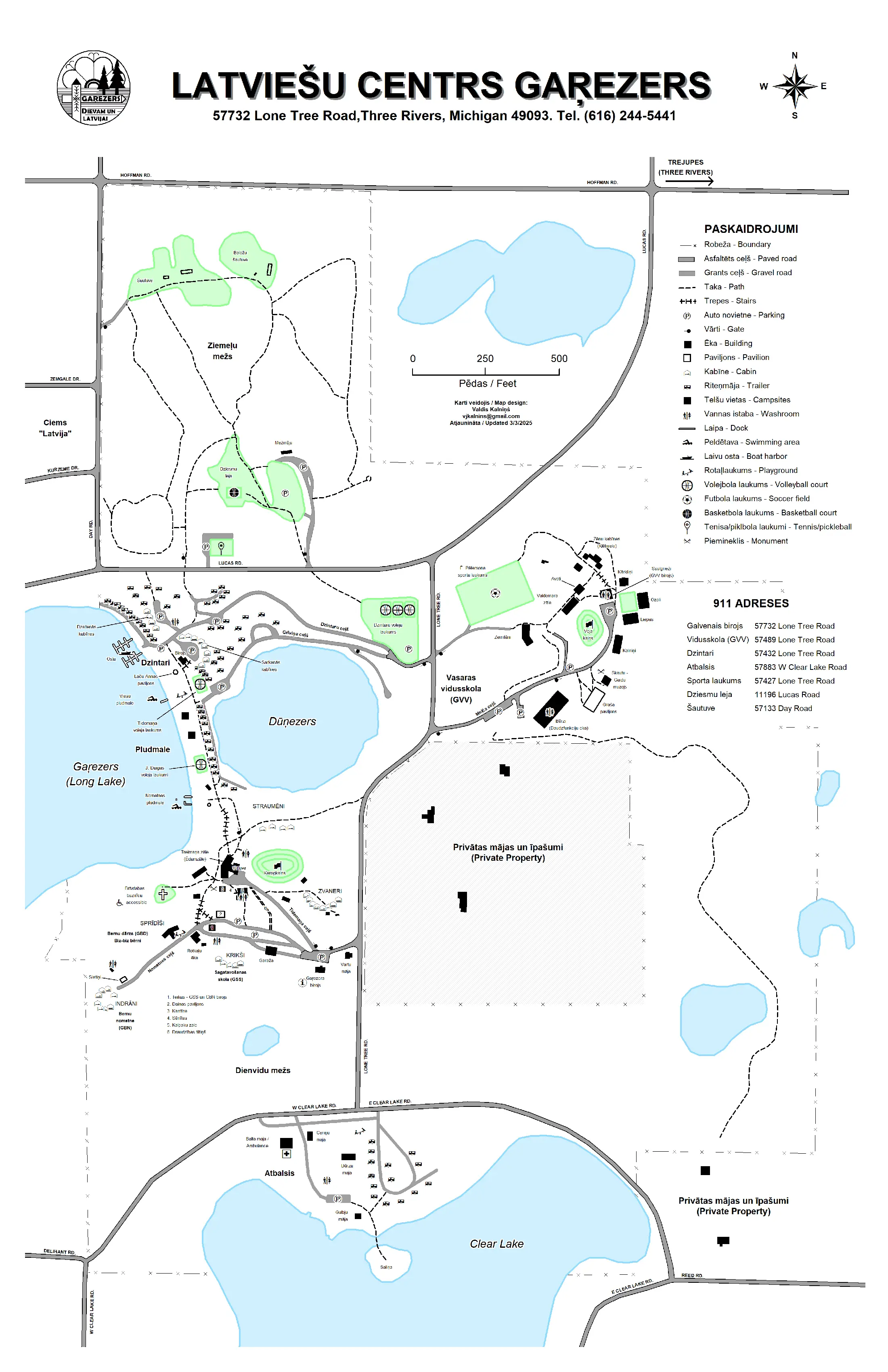
Gaŗezera 169-akru (68 ha) īpašumu (“Camp Lone Tree”) 1965. gadā latvieši nopirka no Čikāgas gaidu vienības.
Doma par draudžu vasaras nometni sākumā bija radusies tālaika ASV Vidienes ev. lut. draudžu garīgajam vadītājam prāv. P. Ķirsonam. Gaŗezera īpašumu — agrāko Amerikāņu Čikāgas gaidu organizācijas īpašumu — “atrada” prāv. V. Vārsbergs 1964. gadā.
Tā gada 17. oktobrī Gaŗezeru apskatija draudžu pārstāvji: V. Treimanis – Kristus draudze Detoitā, P. Golts – Grand Rapidu Vienības draudze, J. Jēkabsons – Svētā Pāvila draudze Maivudā, J. Pētersons – Milvoku draudze, R. Junkulis – Svētā Pāvila draudze Detroitā, A. Medenis – Ciānas draudze Čikāgā, māc. V. Vārsbergs un J. Ķinēns – Svētā Jāņa draudze Kalamazoo.
Verners Treimanis, no Kristus draudzes Detroitā, lika Gaŗezera financiālos pamatus un nodibināja akciju sabiedrību. 1965. gadā, jaunā akciju sabiedrība nopirka Gaŗezera īpašumu par $115,000.
Tieši šo vietu izvēlējās centrālās atrašanās vietas dēļ: uz Gaŗezeru var viegli aizbraukt no ASV vidienes lielākiem latviešu centriem, piemēram Kalamazū, Čikāgas, Detroitas, Grand Rapidiem, Indianāpoles, Klīvlandes un Milvokiem.
Latviešu centrs Gaŗezers ir bezpeļņas organizācija, kura pieder 143. akcionāru organizācijām. Katru vasaru Gaŗezers piedāvā četras izglītības programmas: “bizbiz bērni” bērnu dārzs (GBD), bērnu nometne (GBN), sagatavošanas skola (GSS) un vasaras vidusskola (GVV). Vairāk nekā 300 bērni un jaunieši piedalās šajās programmās, kurās apgūst latviešu valodu, vēsturi un kultūras vērtības, kā arī bauda sportus, mūziku un dažādas nodarbības.
Gaŗezera akciju sabiedrības īpašumā ir pāri par 100 ēku, visas ar latviskiem nosaukumiem un vairākas, kopš 1965. gada, pašu latviešu – talcinieku rokām celtas. Brīvdabas dievnams, ezermala, Dziesmu leja, sporta laukumi un šautuve ir daļa no šī pievilcīgā latviešu īpašuma.
Gaŗezerā notiek dievkalpojumi brīvdabas baznīcā, koncerti un dažādi sarīkojumi, mākslas izstādes un sporta sacensības. Gaŗezers ir populāra vieta ASV latviešiem pavadīt brīvdienas, svinēt svētkus, jubilejas, kāzas, utt. Sezonas laikā apmēram 2000 viesi apmeklē Gaŗezeru.
Ārpus Gaŗezera robežām turpinās “mazā Latvija.” Kaimiņos atrodās ”Ciems Latvija”, kur latvieši dzīvo vai brauc pa vasarām. Latviešiem pieder vairāk nekā 120 mājas un vasarnīcas Gaŗezera tuvākajā apkārtnē.
Gaŗezers ir pastāvējis kopš 1965. gada!
Pateicība pienākas ikkatram darbiniekam, dalībniekam un labvēlim!
Iepazīstieties ar Gaŗezera vadošajām personām un programmu dalībnieku skaitļiem Gaŗezera 44 gadu pastāvēšanas laikā:
Par Gaŗezeru V. Treimanis toreiz teica tā:
“Latviešu centrs Gaŗezers ir domāts kā visas latviešu sabiedrības nacionāli kulturāls pasākums. Gaŗezeram nav nodoma sacensties ar citām vietējām un centrālajām latviešu iestādēm, bet gan sekmēt to darbību, to papildinot, dodot latviešu sabiedrībai to, kas nav pa spēkam atsevišķām mazākām organizācijām. Vai jūsu atbalsts būs liels vai mazs, Gaŗezera vadība būs ikvienam pateicīga. Ziedojiet ne no pārpilnības, bet no pārliecības.”
| AUTO NOVIETOŠANAS ZĪME / PARKING PERMIT | $25 vasarai / season |
| NAKTSMĀJU ĪRE / SLEEPING ACCOMMODATIONS | |
| Sarkanā kabīne / Red Cabins | $75-$100 / $525 ($200 non-refundable deposit) |
| Dzeltenā kabīne / Yellow Cabins | $199-$249 / $1393 ($500 non-refundable deposit) |
| Gulbju māja / Log Cabin | $170-$195 / $1190 ($500 non-refundable deposit) |
| Ceriņu māja / Lailac House | $150-$175 / $1050 ($500 non-refundable deposit) |
| Dārza māja dzīvoklis / Garden House Apartment | $150-$175 / $1050 ($500 non-refundable deposit) |
| Dārza māja A, B, C, D | $70-$95 / $490 |
| TELŠU VIETAS / TENT SITES | |
| Diennaktī / Daily | $25 |
| Nedēļā / Weekly | $175 |
| Mēnesī / Monthly | $350 |
| Vasarā (1. maijā - 31. aug.) / Season (May 1st - Aug 31st) | $600 |
| RITEŅMĀJA / CAMPER | |
| Diennaktī / Daily | $75 |
| Nedēļā / Weekly | $525 |
| Vasarā (1. maijā - 31. aug.) / Season (May 1st - Aug 31st) | $1400 |
| DZINTARU OSTA / BOAT DOCK | |
| Visām laivām / All boats | $50 dienas cena / daily | $600 vasarai / summer |
| Īslaicīgi piestāt ostā / Temporary docking | $300 |
| Laivas treilera novietošana / Boat trailer parking | $75 |
| ĀRPUS PROGRAMMU SEZONU ĪRĒŠANAS NOMAS / OUTSIDE OF PROGRAM SEASON RENTALS Program season: 6/20 - 8/9 | |
| Baltā māja A, B, C, D | $100 / $700 |
| Baltā māja E, F | $70 / $420 |
| Baltās mājas pagalms / Baltā Māja yard | $400 |
| Baltās mājas deks ar virtuvi / Baltā Māja deck & kitchen | $250 |
| Kalniņi | $60 |
| Zemitāni | $60 |
| Kārkliņi | $60 |
| Kalpaka istabas | $60 |
| Kalpaka zāle | $250 |
| Sprīdīši | $60 |
| Treimaņa zāle (ēdamzāle) bez virtuves / Dining hall without kitchen | $1000 |
| Treimaņa zāle ar virtuves / Dining hall with kitchen | $2000 |
| Tikai virtuve / Kitchen only | $1000 |
| Saulgrieži | $400 |
| Graša paviljons | $300 |
| Lāča Annas paviljons | $100 |
| Bērzi | *Call main office for pricing* |
Vai jums ir ideja jaunam projektam Latviešu centrā Gaŗezers?
Neatkarīgi no tā, vai vēlaties ierosināt jauna soliņa uzstādīšanu, ēkas uzlabošanu, lielāku būvniecības projektu vai ko citu, šī Projekta pieprasījuma veidlapa ir pirmais solis apstiprināšanas procesā. Veidlapa palīdz Gaŗezeram izvērtēt projekta mērķi, izmaksas, finansējuma plānu, nepieciešamo darbu, iespējamā darbuzņēmēja iesaisti un ilgtermiņa uzturēšanas pienākumus. Lūdzu ņemt vērā, ka līdzekļu vākšanu nedrīkst uzsākt, kamēr projekts nav apstiprināts, un apstiprināta projekta īstenošana nedrīkst sākties, kamēr projekts nav pilnībā finansēts. Pēc veidlapas iesniegšanas izpilddirektors sniegs atbildi pa e-pastu 30 dienu laikā.
Latvian Center Garezers Project Request Form
LCG Donation and Gift Acceptance Policy
This policy serves as guidance for:
- The Administration (Executive Director, Office Manager, and Bookkeeper) and Board of Directors (“Board”) of Latvian Center Garezers, Inc. (“LCG”) involved in accepting, processing, and accounting for donations and gifts.
- The Fundraising Committee.
- The LCG Investment Committee, as defined in the LCG Investment Policy.
- Outside advisors who assist in the gift planning process.
- All donors who wish to support LCG through charitable contributions.
2.0 Overview
LCG solicits and accepts gifts that support its mission to strengthen Latvian language, culture, and spiritual values while providing a place where community can flourish. Gifts may be accepted from individuals, organizations, partnerships, corporations, foundations, government agencies, trusts, or other entities.
LCG may accept donations including:
- Cash
- Securities
- Real estate
- Life insurance beneficiary designations
- Tangible personal property
- Planned gifts
- Bequests
- Pledges
The Administration serves as the primary point of review for all proposed gifts. Depending on the nature of the asset, the Administration may consult with the Investment Committee, Fundraising Committee, or other advisors. Gifts involving significant complexity, restrictions, or risk may be referred to the Board for approval. The Board retains final authority over acceptance of gifts where required by this policy.
When a proposed gift is declined, the Administration will document the circumstances internally and communicate the decision respectfully to the prospective donor.
LCG respects donor privacy. Information about donors who wish to remain anonymous will be limited to those within the Administration and Board who have a need to know.
While LCG cannot provide legal or tax advice, the organization encourages donors to consult independent legal and financial advisors regarding their charitable contributions and estate planning.
LCG is committed to ethical fundraising practices and will respect the dignity, intent, and privacy of all donors.
The Administration will document the circumstances internally and may elevate recurring or significant matters to the Board for awareness.
2.1 Third-Party and Independent Fundraising Activities
Any fundraising activity conducted on behalf of, in support of, or using the name of Latvian Center Gaŗezers, including but not limited to online crowdfunding campaigns (e.g., GoFundMe), social media fundraisers, peer-to-peer fundraising, or community-led donation drives, must be coordinated in advance with the Executive Director.
All such fundraising activities must align with organizational priorities, donor stewardship practices, and applicable financial controls.
No individual or group may solicit funds, use the name of LCG, or represent that they are fundraising on behalf of LCG without prior authorization from the Executive Director or other designated organizational authority.
Funds raised for LCG must be directed through approved organizational channels unless otherwise authorized.
LCG reserves the right to require modification, suspension, or closure of any fundraising activity using its name or benefiting the organization.
2.2 Gift Acknowledgement
LCG acknowledges all donations in accordance with IRS requirements.
Donors will receive written confirmation of their contributions.
LCG does not assign a value to non-cash gifts for tax purposes. Determining the value of such gifts and obtaining any required appraisals is the responsibility of the donor.
2.3 Lifetime Donors
LCG records donations individually and cumulatively over the donors’ lifetime. LCG’s lifetime donation records are maintained according to this chart:
Lifetime Donors / Mūža labvēļi
| Ziedotāju pakāpe / Donor level | Ziedojumu summa / Donation total | Krāsa / Color |
| Saule / Sun | Testamentary gift | No pin that I am aware of |
| Auseklis / Morning star | $250,000 + | zelta / gold |
| Namejs / “namejs” | $100,000 + | sudraba ar dzintaru / silver with amber |
| Liepa / Linden | $50,000 + | dzeltena / yellow |
| Kłava / Maple | $25,000 + | sarkans / red |
| Ozols / Oak | $10,000 + | brūna / brown |
| Bērzs / birch | $5,000 + | pelēka / gray |
| Priede / pine | $1,000 + | zaļa / green |
3.0 – Types of Gifts
3.1 Cash Gifts
Gifts may be made by cash, check, or credit/debit card. Checks shall be made payable to Latvian Center Garezers, Inc. Checks intended as donations shall not be made payable to any individual representing LCG.
3.2 Securities
3.2.1 Publicly Traded Securities (Stock)
Readily marketable securities, such as those traded on stock exchanges, may be accepted by LCG. Gifted securities may be sold in accordance with the LCG Investment Policy.
3.2.2 Closely Held Securities
Non-publicly traded securities may be accepted following review by the Administration in consultation with the Investment Committee or other qualified advisors. Prior to acceptance, LCG will evaluate potential methods of liquidation and any restrictions on transfer.
Examples include:
- private company stock
- family business shares
- partnership interests
- LLC membership interests
- private equity investments
- debt securities issued by private companies
3.2.3 Digital Assets (Cryptocurrency)
LCG may accept gifts of digital assets (e.g., cryptocurrency), subject to review by the Administration in consultation with the Investment Committee as needed.
Digital assets will typically be converted promptly to cash upon receipt, unless otherwise determined in consultation with the Investment Committee or, in unusual cases, the Board.
3.3 Real Estate
Gifts of real estate require Board approval prior to acceptance. The Administration will coordinate the review process and present recommendations to the Board. The decision to accept or refuse such a gift shall be recorded in the minutes of the Board meeting.
Before acceptance, the Board may request:
- property appraisal
- land survey
- environmental review
- title work
- other due diligence
The Board or its designee will conduct a visual inspection of the property. The donor may be asked to cover some costs associated with evaluation or sale. If real estate is not located near LCG or cannot be reasonably utilized, it may be retained, utilized, or sold as determined by the Board.
The donor must provide the following documents in addition to others required by the Board or its advisors:
- Real estate deed or title
- Real estate tax bill
- Plot plan
- Substantiation of zoning status and compliance or non-compliance with that zoning
3.4 Life Insurance
LCG may accept gifts resulting from being named as a beneficiary of a life insurance policy. Donors may designate LCG as a full or partial beneficiary of a policy. LCG does not assume ownership or administration of life insurance policies and will not be responsible for premium payments.
3.5 Tangible Personal Property
Gifts of tangible personal property should have a use related to the exempt purpose of LCG. Examples include: artwork, equipment, collections, software, and other physical assets. The Administration is responsible for reviewing such gifts and may approve acceptance for items of routine nature. Gifts involving significant value, storage requirements, ongoing maintenance, or other potential risks may be referred to the Board for review and approval. Once accepted, gifts become the property of LCG and may be used, sold, or otherwise disposed of at the organization’s discretion.
3.6 Planned Gifts (Legacy gifts, Deferred gifts)
LCG may accept the following planned gift options:
3.6.1 Charitable Gift Annuities
LCG may accept gifts resulting from charitable gift annuities established through qualified third-party organizations. In such arrangements, LCG may be named as the remainder beneficiary of the annuity. LCG does not currently administer charitable gift annuities directly.
3.6.2 Deferred Gift Annuities
LCG may accept gifts resulting from deferred gift annuities established through qualified third-party organizations. LCG does not administer such arrangements directly.
3.6.3 Charitable Remainder Trusts
Due to the cost of drafting and administration, it should be clear that overall estimated benefits should exceed estimated costs before significant analysis is performed. Management fees for the administration of a charitable remainder trust when LCG is named as trustee or co-trustee shall be paid from the income of the trust. Charitable remainder trusts may name LCG as a beneficiary. Management and administration of such trusts are handled by the fiduciary or trustee designated by the donor.
3.6.4 Bequests (Testamentary Gifts)
LCG may accept gifts made through wills or estate plans. Donors who have included LCG in their estate plans are encouraged, but not required, to notify the organization. Such information will be kept confidential unless permission is given to disclose it.
3.7 Pledges
Pledges may be accepted at the discretion of the Administration or Board.
Pledges must:
- have a value of at least $1,000 unless otherwise approved by the Administration
- be confirmed in writing
- specify payment terms
4.0 Undesignated Donation
Donations made without a specified purpose will be treated as undesignated donations. These funds may be used for general operating purposes or directed to existing funds as determined by the Administration with oversight from the Board.
5.0 Board Designated and Donor Restricted Funds
LCG maintains several board-designated and donor-restricted funds that support its mission. These funds may be grouped for investment and administrative purposes while maintaining their individual donor designations and intended uses. The Board of Directors retains ultimate authority over the establishment, modification, and use of all funds. Day-to-day administration of these funds is managed by the Administration in accordance with this policy and the approved operating budget. Unless otherwise specified, funds may include both principal and accumulated earnings that may be used for their stated purpose. While LCG strives to honor donor intent, all funds remain the property of LCG and final authority over their administration rests with the Board.
If circumstances change such that the original purpose of a fund becomes impractical or impossible to fulfill, the Board may redirect the fund in a manner that most closely aligns with the donor’s original intent and the mission of LCG.
5.1 Unrestricted Endowment
The Endowment supports the long-term financial sustainability of LCG. Income and growth earnings may be used for general purposes as recommended by the LCG Investment Committee. Principal withdrawals require approval consistent with LCG bylaws.
5.2 Program Support Funds
Donations made to these Board Designated Funds will increase the fund balance. The principal and any growth of the fund assets may be used for the designated purpose of the fund.
The Executive Director is authorized to approve use of these funds in accordance with this policy. The Board retains authority to approve use directly or modify such approvals as needed. The Executive Director may consult with Program Leaders, as appropriate, in making these decisions. The Administration is responsible for implementing approved expenditures and notifying the Treasurer.
The following funds are used to fulfill needs of the Programs that have not been addressed by the operating budget. These funds support the educational and cultural programming of LCG across its youth education programs. Donations may be used to enhance curriculum, instructional materials, cultural and recreational activities, and other program resources appropriate to each age group, from preschool through high school, with the goal of strengthening Latvian language, culture, and community engagement.
- The GVV Program Support Fund
- The GSS Program Support Fund
- The GBN Program Support Fund
- The GBD Program Support Fund
Additional Program Support Funds:
- The GVV Financial Aid Fund:
This fund is used to provide financial aid to those LCG Summer High School students who have been determined to need financial assistance. This fund helps ensure that no adolescent misses out on our enriching Latvian educational experience due to financial constraints. This fund helps ensure access to LCG’s educational programming regardless of financial circumstances and supports future community leadership development.
LCG administers several donor restricted Program Support funds in accordance with donor wishes. The restricted funds are listed below. The specific intentions of each fund are available from the Administration.
- Maija and Anna Inveiss GVV Restricted Fund
- Māra Freimanis GVV Restricted Fund
- Steinmanis GVV Restricted Fund
5.3 LCG Mission Fulfillment Funds
Use of the funds below requires Board approval. Donations made to these existing board designated funds will increase their principal amount. The principal amount and any growth of the fund assets may be utilized for the end use designated by that fund.
- Nurturing faith in our community | Faith Fund
Donations are used to support physical enhancements of LCG outdoor church and faith-based activities for both program participants and visitors, enriching the religious education and experience of our community.
- Celebrating and preserving the Latvian culture | Culture Fund
This fund is dedicated to supporting and promoting the rich traditions of the Latvian culture and the physical items we maintain and display which represent it.
- Creating community through sports and recreation | Sports and Recreation Fund
This fund focuses on fostering community bonds and enhancing well-being through sports and recreational activities, providing accessible and engaging opportunities for all members of the community to connect.
- Revitalizing our environment and memorable spaces | Maintenance Fund
Donations received to this fund are dedicated to enhancing and maintaining our environment and its infrastructure (e.g., buildings, roads) to provide a place that builds community. LCG administers restricted Mission Fulfillment funds in accordance with donor wishes. The restricted funds and the specific intentions of each fund are available from the Administration.
5.4 New Donor Designated Funds
A donor may request the creation of a new designated fund for projects that support the mission of LCG.
Such funds require:
- Board approval
- a minimum initial contribution of $10,000
- a minimum ongoing balance of $5,000
If a fund balance falls below the required minimum and is not replenished within 60 days after notification, the Board may reallocate the remaining funds to another fund consistent with LCG’s mission.
If funds are raised for infrastructure or capital projects, a portion of the donation may be allocated to the Maintenance Fund to support long-term upkeep.
6.0 Exclusions
Gifts will not be accepted if they:
a) are inconsistent with the mission of LCG or risk violating its corporate charter
b) could jeopardize its status as an Internal Revenue Code §501(c)(3) nonprofit organization
c) are too difficult or costly to administer relative to their value
d) may result in unacceptable legal, financial, or reputational consequences for the organization
CAMPGROUND RULES AND GUIDELINES
Background:
• Garezers is a private not-for-profit organization owned by Latvian shareholder organizations with the purpose of conducting educational, cultural, charitable, religious, and social activities.
• The business and affairs of Garezers are managed by its Board of Directors, which has approved policies and rules governing the use, function and activities of the campground. They are implemented by Garezers Administration and designees and apply to all workers, campers and visitors.
• The campground provides a site for various youth programs and other events, as well as temporary residency for participants, family members, volunteers and program or event supporters. The campground also serves the community by providing a site where individuals and families can meet in a recreational setting to socialize and establish or foster connections and friendships with others who value their Latvian identity and heritage.
• Entry to and use of the campground is restricted to program participants, their families and invited guests, and those granted permission by the Garezers Administration. It is expected that all use will be consistent with and in furtherance of Garezers purposes.
• Garezers is able to operate through the freewill contributions and fees and activities conducted at the campground. It is mandatory that all campers and visitors obtain all applicable permits for camping, vehicles, boats, and other related activities. They are also encouraged to further support Garezers with volunteer efforts and monetary contributions.
• Garezers’ goal is to provide all campground users with a pleasant family atmosphere during their use and stay. Please treat the campground with the same respect, care and common sense as you would expect in your own home, so Garezers can continue to provide this benefit for you and others. Please respect the privacy and rights of other users.
General Rules:
• The campground is open during the mid-Spring (April) through mid-Autumn (November) season only. Special permission is required for any use outside of this time period by Garezers Administration.
• These rules apply to the entirety of the Garezers campground. However, additional rules and restrictions may apply to specific areas within the campground during the peak season, from Memorial Day through Labor Day, and/or during the specific 6-week summer camp program timeframes. Additional rules and restrictions may also apply to certain programs, groups and/or events.
• All workers, campers and visitors shall comply with local, state and federal laws.
• Campers and visitors must be at least 18 years of age to obtain permits. Permit holders must have valid identification that verifies proof of age and will be asked to complete registration forms. The permit holder is responsible for the conduct of everyone in their party.
• Individuals under 18 years of age must be under the supervision of a parent or guardian, who will be held responsible for the actions of their children.
• In compliance with Michigan state laws, alcohol use under 21 years of age is prohibited.
• Campers and visitors are responsible for their behavior and actions, and that of their guests. Campers and visitors must be considerate of others enjoying activities at the campground. Please remember to tone down your visitation and music (in particular amplified music or instruments) in the evenings, out of respect to others. In addition, for the Dzintars and Atbalsis areas, there is a Sunday through Thursday evening curfew of 12:00 midnight, and a Friday and Saturday curfew of 2am. These curfew times are consistent with those of the concurrent high school and programs in session, which apply to the program participants and staff housed in adjacent campground areas.
• All trailers, tents, vehicles and boats must display a valid permit. Vehicles and boats must be parked or moored in designated areas only. Trailers, tents, vehicles and boats without permits will be removed and/or towed at the owner’s expense. When entering the campground, please observe speed limits, drive slowly and be on the watch for pedestrians and especially children.
• Please respect the environment and help keep our campsite clean. Clean up after yourselves and deposit litter in designated garbage cans and containers.
• Pet owners shall not leave their pets unattended outdoors. While outdoors, all pets must be on a leash or properly secured with in-ground tethers. Leashes and tethers may not exceed ten (10) feet in length. In compliance with Michigan state law, pets are not permitted on beaches in areas designated for wading or swimming. Pets are not permitted in children’s recreational areas. Pet owners shall keep all pet food properly and securely contained unless a pet is actively eating. Pet owners shall clean up the area in which a pet eats afterwards. Pet owners shall pick up and properly dispose of all waste. Pet owners are solely responsible for the behavior and actions of their pets. Latvian Center Garezers, Inc. reserves the right to ban any pet that causes harm or damage to any person or other animal, and to impose additional bans, limitations, or restrictions on the pet owner.
• Glass bottles are not permitted on the beach in areas designated for wading and/or swimming.
• During the specific 6-week summer camp program time frame there are supervised swimming areas and times. Hours and additional guidelines are posted at the lakefront, and must be observed. Entry to the lake for wading or swimming at any time is at the risk of the camper and/or visitor.
• Use of fireworks, firearms or other explosives is prohibited.
• Cutting down of trees or shrubs is prohibited.
• Campfires are permitted in designated areas only.
• Garezers Administration and designees reserve the right to refuse admittance and/or to evict campers and visitors from the campground for non-compliance with these rules, using their judgment and assessment of the situation, without refund of any permits or fees.
• Questions regarding these rules should be directed to Garezers Administration.
• Garezers reserves the right to change these rules & guidelines at the discretion of Garezers, as required, and without notification.
Release and Hold Harmless Agreement:
• Upon entering the campground, campers, visitors and other users recognize and acknowledge that there are certain risks of physical injury, and they assume full risk of any injuries, damages or loss which may be sustained as a result of any and all activities taking place on the campground.
• Upon entering the campground, campers and visitors and other users waive and hold harmless Garezers, its Board of Directors, Administration and other officers, agents, servicers, servants and employees from any and all claims from injuries, damages or loss which may result from any and all activities taking place on the campground.
• Garezers is not responsible for stolen, damaged, or lost personal property of any worker, camper or visitor.
Garezers Trailer Site Lease Policies & Guidelines
Purpose: This document sets forth the policies and guidelines under which Garezers grants eligible individuals the privilege to lease a trailer site on land owned by Latvian Center Garezers, Inc. (hereinafter referred to as Garezers.) This document may be revised by Garezers when it is necessary. This policy applies to the Atbalsis and Dzintari trailer sites.
Function of Trailer Site Use: Garezers trailer sites are a resource to be administered and used in furthering the overall mission and goals of Garezers and the policies adopted by its organizational governance, in line with requirements set by the State of Michigan and local jurisdictional regulations. Trailer site use serves an important function in supporting the various youth, cultural, religious, recreational and other programs and events occurring at Garezers by providing convenient accommodations for participants, family members, volunteers and program or event supporters. Trailer site use also serves an important social function for the broader Latvian community by providing individuals and families a setting and opportunity to meet, socialize, and establish or foster connections and friendships with others who value their Latvian identity and heritage. Trailer site leasing privileges are granted with the expectation and understanding that use of the site will be consistent with these purposes.
Ownership & Use of Trailer Site: Trailer sites are owned by Garezers, and the privilege of occupying a site is subject to the terms, conditions and fees established by Garezers. Site occupants have no ownership in the site, and no right to assign, sublease, transfer or otherwise convey occupancy rights to another party except as noted in this document. It is the intent of Garezers that the granting of trailer site use is for the mutual benefit of the Camp and the trailer owner and is not intended to function solely as a recreational camping site. Trailer owner names and contact information must be provided to Garezers, in writing and need to be updated, verified and acknowledged annually at time of site lease renewal.
Terms and conditions:
- Lease Term: 12 months, commencing January 1st and ending December 31st.
- Trailer & Septic Fee: Determined by trailer size and if septic dry well or hook up to central system. Questions regarding fees should be directed to Garezers administration.
- Lease Includes:
- One (1) free pass for the 4 + 2 volleyball weekend event.
- One (1) Garezers auto sticker.
- Services: Includes use of Garezers grounds, electricity, water, waste disposal.
- Damage: There is no individual trailer insurance available or implied from Garezers. Trailer owners are responsible for all loss due to theft, fire, vandalism and/or acts of God. Private insurance coverage should be obtained by the trailer owner, as necessary.
- Eligibility: The primary trailer owner must be at least 21 years of age and a member in good standing of a Garezers shareholder organization. Eligibility requirements are fulfilled when the trailer owner signs and returns the Acknowledgement section of this document along with the lease fees.
- Occupancy: The trailer tenant must be the trailer owner and/or a trailer owner’s immediate family. For purposes of this policy, immediate family is defined as a spouse or domestic partner and dependent children. The trailer may not be sub-leased or rented. The land of the trailer site may not be sub-leased or rented.
- Non-Transferable: The Garezers Trailer site lease is offered only to the current trailer owner and the owner’s immediate family, as defined above. Trailer site leases may not be inherited, assigned, subleased, or otherwise transferred to extended family members or any other individuals under any condition.
- Consideration of fellow residents: Trailer owners and their guests are expected to comply with established Garezers curfew times and campground rules and to conduct themselves in a manner that respects fellow residents, campers, staff, and program participants. Behavior that is disruptive or inconsistent with these expectations, including excessive noise or late-night social activity, may be addressed by Garezers administration and, if not corrected, may result in warnings, fines, or other action, up to and including revocation of trailer site privileges.
- Participation: All trailer owners are required to directly assist and support Garezers’ program activities and/or work programs and other volunteer functions. This support from each trailer owner can be fulfilled in a wide variety of ways. For more information, please contact our Main Office.
- Appearance: Trailer owners are expected to maintain the exterior of their trailer and the surrounding area (trailer site) in a clean and orderly appearance.
- Vegetation and Landscaping: Trailer owners are not permitted to alter Garezers terrain or vegetation for purpose of: a) expanding or enlarge trailer sites, b) expand or create camping sites, c) expand or create parking or storage areas, or improve views. Trailer site users may cut shrubs or small trees (less than 12′ tall) that are within 4 feet of the trailer. Any other cutting, planting, or alteration of terrain around trailers must receive advance written approval from Garezers administration.
- New trailers, structures and additions: New trailers, structures, and additions are not permitted without prior written approval from Garezers administration. Requests for approval must include a measured drawing or site plan showing the proposed dimensions and placement. Approval must be received before any work begins. Failure to obtain written approval will result in a $500 fine.
- COW Construction: The construction of a COW (Cabin on Wheels) is not permitted on Garezers property. A COW may be constructed off site and positioned in an available trailer site only after the COW construction is complete.
- Parking: There are no guaranteed or assigned parking areas for autos of trailer owners. Some trailer sites provide room for auto parking while others do not. Signs restricting and designating parking are posted in some areas.
- Animals & Pets: All dogs on Garezers property—whether belonging to trailer owners, rental guests, or visitors—must remain on a leash at all times and may not roam freely. Dogs may not be left unattended outdoors and must be secured inside a trailer, rental unit, or enclosed structure when the owner/handler is not present. All individuals are required to clean up and properly dispose of pet waste. Owners/handlers assume full responsibility for their dog’s behavior, damages, and any disturbances. One warning will be issued for violations; continued non-compliance may result in a $250 fine and/or removal from the property.
- Reporting Violations: Non-emergency violations of these policies should be reported to Garezers administration via the designated Pet Policy Violation Report form. Immediate safety concerns must be reported to the Dzintar Office – 57432 Lone Tree Road, Three Rivers, MI 49093, 269-244-8291 or on-site leadership.
- Termination: If you do not wish to use the site and/or renew your lease, you must inform Garezers immediately and make your site available to the next person on the wait list.
- Vacating Premises: Moving out and vacating the leased trailer site is the responsibility of the trailer owner. The trailer owner is responsible for the removal of any, and all structures, additions, septic systems and other items on the trailer site, in line with requirements set by the State of Michigan and Garezers.
- Trailer Ownership: Trailer site leases do not convey inheritance or succession rights. When a trailer owner decides to not renew his trailer site lease and would like to sell his trailer “on the Garezers trailer-site”: The Administrator will specify a time duration to facilitate the sale (by owner) of his trailer to the next party (buyer) on the waiting list. Should the owner and buyer be unable to agree on the sale price of the existing trailer, but the buyer is interested in the trailer site, the trailer will be considered unwanted and the owner will be responsible for immediate removal of his trailer from the Garezers trailer-site.
- Abandoned Trailers: When a trailer owner does not remove an unwanted trailer before a deadline specified by the Administrator, or if a trailer owner does not respond to inquiry of an unused, derelict or otherwise unwanted trailer, the trailer will be considered abandoned. The abandoned trailer will be removed by Garezers at the trailer owners expense.
- Revocation: Garezers reserves the right to revoke a trailer site lease for failure to comply with these policies and guidelines. Trailer site leasers who do not sign and return this document with their lease payment by the start of the season will be considered in violation of their agreement with Garezers and are subject to forfeiture of all considerations and possible eviction.
Questions & Comments: Please contact our Main Office.
Trailer Site “Wait List”
Purpose: The “Wait List” consists of individuals who would like to lease a Garezers trailer site. This section summarizes the guidelines and process under which Garezers administers the Wait List. It may be revised at any time, when deemed necessary by Garezers.
__________________________________________
Question 1: How can someone get on the Wait List?
Answer 1: Eligibility is open to individuals who are at least 21 years of age and are members in good standing of a Garezers shareholder organization. To be on the wait list, Garezers must receive a written request, along with a non-refundable check deposit to Garezers for $200. Those currently on the Wait List will need to meet eligibility requirements. This deposit will be used as part of the trailer site lease when you have been granted a trailer site. Garezers administration maintains the official Wait List.
__________________________________________
Question 2: What does being on the Wait List provide?
Answer 2: A place holder on the list, by chronological date order of the request and associated deposit. This place holder provides the individual the opportunity to lease an available Garezers trailer site, based upon the process further described below.
__________________________________________
Question 3: What is the process to obtain a trailer site?
Answer 3: Garezers automatically offers renewals of trailer sites to the individuals who had leased the previous year. Occasionally, these individuals may choose not to renew and their trailer site becomes available.
- When a trailer site becomes available, the 1st person on the Wait List is contacted and offered the trailer site.
- If the Wait List individual is interested in the site and the site has an existing trailer which the owner is willing sell, the individual may purchase the existing trailer if the price is acceptable leaving the trailer in place.
- Should the Wait List individual be interested in the site, but not the trailer, regardless of reason, the owner of the existing trailer must remove the trailer from the site.
- If the 1st Wait List individual does not wish to lease the available trailer site, they may pass. The available trailer site will be offered to the 2nd name on the Wait List, and so on until the trailer site is accepted. Any Wait List individual who chooses to pass on an available trailer site retains his place on the list.
- Garezers has no obligation to assist or otherwise intervene with individuals vacating or obtaining trailer sites.
Updated 2026
Policy Enforcement & Response Guidelines
Updated & Approved – January 2026
Purpose
Latvian Center Garezers (LCG) is committed to maintaining a safe, respectful, and well-managed environment for campers, staff, guests, volunteers, and community members. These guidelines establish a consistent process for responding to concerns, policy violations, and safety issues on LCG property and during LCG-sponsored activities or events. Policy enforcement for program participants is also subject to program-specific rules while participants are enrolled in a program.
Privacy
Latvian Center Garezers will handle concerns and potential violations with discretion and will maintain confidentiality to the fullest extent permitted by law. Information may be shared when necessary to protect safety, comply with legal requirements, meet mandatory reporting obligations, or carry out an investigation or response. Investigations involving minor children will be conducted so as to involve the child’s parent(s) or legal guardian(s) to the extent possible. Although parents or guardians understandably may have concerns about investigations involving children who have reached 18 years of age, parental involvement in investigations involving legal adults is subject to LCG’s discretion and sound investigative practices.
Reporting
Concerns should be reported promptly to the Executive Director or appropriate program leadership.
If there is an immediate threat to safety or a serious crime in progress, call 911 (or local emergency services) immediately (if safe to do so), and notify the Executive Director as soon as practicable. For non-emergency concerns, staff, guests, volunteers, and board members should notify the Executive Director so appropriate next steps can be taken.
Definitions
- Employee: Anyone currently paid for work performed at LCG, whether seasonal, part-time, or full-time, hourly or salary, regardless of whether the person is engaged in the course and scope of their employment with LCG.
- Guest: Anyone staying in LCG accommodations, renting LCG property, attending an event, or visiting as a guest of someone doing so.
- Volunteer: Anyone donating time or labor at or on behalf of LCG, while engaged in providing that time or labor.
- Verbal Warning (Documented): A verbal conversation in which expectations are clarified and the conversation is recorded for future reference.
- Written Warning: Written documentation provided to an individual describing the concern, expectations going forward, and potential consequences for continued violations.
Governance Oversight & Escalation
Latvian Center Garezers is governed by its Board of Directors. The Executive Director provides active management of daily operations and has authority to take immediate action when safety, property, or operational integrity is at risk, including implementing interim protective measures and issuing directives.
When governance involvement is needed between Board meetings, the Executive Committee (as defined in the bylaws, consisting of the officers of the Corporation and any additional Directors appointed by the Board) may act in place of the Board of Directors, subject to ratification by the Board of Directors at the next regular Board meeting.
When the Executive Committee Is Notified / Involved
The Executive Director will notify the Executive Committee as soon as practicable when any of the following occur (or are reasonably suspected):
- Level A matters (immediate threats to safety, weapons, credible threats, serious injury, sexual misconduct, suspected abuse involving a minor)
- Breaking and entering, theft involving forced entry, or other significant criminal conduct, especially when law enforcement is contacted
- Any incident likely to require removal of individuals from property beyond the current program session, event, or rental period, or a restriction on access beyond a short, temporary timeframe
- High-impact employment actions, including termination of a year-round employee, when notification is necessary for organizational risk awareness rather than operational involvement
- Significant community impact or reputational risk (e.g., public allegations, media attention, widespread disruption)
- Potential conflict of interest, including situations involving senior leadership or Board members
Role of the Board of Directors
The Board of Directors will receive incident summaries and outcomes through normal reporting and will ratify actions of the Executive Committee at the next regular Board meeting when applicable. The Board retains authority over major governance decisions and conflict-of-interest matters requiring the Board to designate an investigation lead.
How Latvian Center Garezers Determines Response Severity
LCG uses a three-step process to evaluate concerns and determine an appropriate response.
Step 1 — Safety First (Immediate Risk)
LCG first determines whether there is an immediate risk to safety or a serious incident requiring urgent action. This includes situations involving violence, weapons, credible threats, serious injury, sexual misconduct, suspected child abuse, breaking and entering or theft involving forced entry, or other emergencies.
When immediate risk is present, LCG may take immediate protective steps, including separating involved individuals, restricting access to areas, contacting emergency services, or requiring a person to leave the property pending review.
Interim Protective Measures (Executive Director Authority)
To protect safety, maintain order, and preserve the integrity of a review, the Executive Director (or designee) may implement interim measures at any time, with or without prior notice, pending assessment or investigation. Interim measures are not disciplinary findings and may include temporarily restricting access to certain areas, limiting participation in activities, issuing no-contact directives, adjusting work assignments or supervision, requiring a person to leave the property for a defined period, securing property or evidence, and contacting appropriate authorities when necessary.
Step 2 — Legal & Mandatory Reporting Considerations
LCG evaluates whether the situation involves legal obligations or mandatory reporting requirements. When required, or when necessary to protect people and property, LCG will involve appropriate authorities or agencies.
LCG may involve law enforcement when theft, breaking and entering, or other criminal conduct is suspected, when required by law, or when necessary to protect people and property.
Step 3 — Conduct & Policy Review
LCG reviews what occurred, the circumstances, and the applicable policies to determine the appropriate Response Level and next steps. Reviews may include interviews, review of documentation, and written statements when appropriate.
Response Levels
Response Levels are intended as guidance, not a rigid formula. Some incidents may involve multiple issues or overlapping categories. In those cases, LCG will assign the highest applicable level and may apply multiple actions from more than one level based on safety needs and the circumstances.
Response Actions: The actions listed under each level describe common actions LCG may take. They are not a required checklist and may be taken in a different order, combined, or omitted depending on the circumstances. Interim protective measures may be implemented at any time when necessary to protect safety, maintain order, or preserve the integrity of a review.
Level A — Immediate Safety Response (Highest Severity) The following list provides examples and is not exhaustive:
- Immediate threats to camper, staff, or guest safety
- Violence, weapons, or credible threats of harm
- Sexual misconduct or serious boundary violations involving minors
- Suspected child abuse or situations requiring mandatory reporting
- Serious medical misconduct impacting safety (for example, dispensing prescription medication to a minor without authorization)
- Breaking and entering or theft involving forced entry
- Deliberate acts creating serious safety hazards (e.g., tampering with safety, electrical, water, or septic equipment)
Response Actions (as appropriate):
- Immediate protective action to stabilize the situation (separation, restricted access, removal from an area/activity)
- Executive Director (or designee) issues necessary directives and interim measures (e.g., no-contact directives, restricted access, temporary removal from property pending review)
- Notifications as appropriate (guardians when a camper or minor is involved; authorities/mandatory reporting channels when required)
- Incident documentation and preservation of relevant information (photos, logs, communications, statements as appropriate)
- Formal review/investigation to determine findings and next steps
- Outcomes appropriate to role and severity, which may include termination (employees), dismissal/expulsion (program participants), and/or removal/ban from property (guests/volunteers)
- Executive Committee notification as soon as practicable when Level A response is initiated or when governance action is likely needed
Level B — Serious Misconduct Review (Significant Severity)
The following list provides examples and is not exhaustive:
- Harassment, discrimination, intimidation, bullying, or retaliation
- Substance-related policy violations
- Theft, attempted theft, possession of stolen property, breaking and entering, or tampering with secured areas (including, but not limited to, storage areas, offices, or the camp store)
- Significant property interference or vandalism
- Serious safety procedure violations that create risk but are not an immediate emergency
- Unauthorized transportation of campers or serious boundary concerns not rising to Level A
- Repeated policy violations after prior warning or corrective action
Response Actions (as appropriate):
- Prompt leadership response with clear expectations and boundaries
- Documentation of the concern, key facts, and relevant supporting information
- Corrective action appropriate to the situation and role (documented verbal warning, written warning, corrective action plan, restriction of privileges)
- Targeted restrictions when needed (housing, driving, access to areas, participation in activities/events)
- For theft/breaking and entering/property damage concerns: securing areas/evidence, restitution/financial responsibility where appropriate, and possible law enforcement involvement
- Escalation to Level A when risk increases, safety is threatened, or behavior continues
- Executive Committee summary after resolution when the matter involves significant criminal conduct, high community impact, or governance action between Board meetings
Level C — Standard Conduct Correction (Lower Severity) The following list provides examples and is not exhaustive:
- Minor or first-time policy violations not meeting the levels of severity described above
- Low-level conflicts, disrespect, or disruptive conduct
- Unintentional rule violations that do not create significant safety risk
- Minor property issues or negligence without malicious intent
Response Actions (as appropriate):
- Coaching, mediation, and clear direction on expectations
- Basic documentation as appropriate (date, concern, guidance provided)
- Progressive response if repeated (documented verbal warning or written warning)
- Escalation to Level B for patterns of non-compliance or repeated concerns
Cooperation & Documentation
LCG may ask individuals involved to provide information or a written statement when appropriate. This allows leadership to understand what occurred and respond fairly and consistently. Investigation materials and corrective actions may be documented and maintained in accordance with applicable policies and legal requirements. LCG generally considers investigation materials and corrective actions confidential, legally privileged, and protected from disclosure. LCG does not make such materials available, either publicly, to shareholders, or to persons involved in investigations without the express permission of the Board of Directors or the Executive Committee.
During a review, LCG may impose interim measures (such as temporary restrictions or removal from a location or activity) when needed to protect safety, prevent disruption, or preserve the integrity of the process.
Review / Appeal
If an individual believes they were unfairly treated, they may submit a written request for review to the Executive Director. If the matter involves a conflict of interest, or if governance review is appropriate based on severity, the Executive Committee may review the matter in closed session and take action as permitted by the bylaws, subject to Board ratification at the next
regular Board meeting when applicable. LCG will respond as soon as practicable based on operational needs and the seriousness of the concern. Final determinations rest with LCG leadership and/or the Board, as applicable.
Non-Retaliation
Retaliation against any individual who raises a concern in good faith or participates in a review or investigation is strictly prohibited and may be treated as a serious policy violation.
Anti-Bullying, Anti-Harassment & Anti-Discrimination Policy
Latvian Center Garezers (LCG) is committed to maintaining a safe, inclusive, and respectful environment for all members of our community, including campers, staff, families, volunteers, and guests. Bullying, harassment, discrimination, intimidation, exclusion, boundary violations, and any behavior that undermines safety or community well-being are not tolerated in any LCG program, activity, or setting.
This policy applies across the entire LCG property—including program areas, staff housing, trailer areas, tenting areas, shared waterfront spaces, and common areas—as well as during all LCG-sponsored activities and events.
Equal Opportunity & Protected Characteristics
LCG prohibits harassment or discrimination based on any protected characteristic under applicable federal, state, or local law. This includes, but is not limited to: age; race, ethnicity, or national origin; religion; disability or neurodiversity; sex; sexual orientation; gender identity or gender expression; socioeconomic background; and body size. Targeting an individual based on any personal characteristic is considered a serious violation of this policy.
Standards of Respect & Community Behavior
Prohibited conduct may be verbal, physical, written, visual, or digital in nature and includes, but is not limited to: slurs, insults, stereotypes, or degrading language; threats, intimidation, coercion, or unwanted attention; sexual harassment; intentional misgendering; unwanted physical contact; and behavior that creates an intimidating, hostile, or offensive environment. Intent does not excuse impact—behavior that makes others feel unsafe, unwelcome, or disrespected is not acceptable.
LCG also recognizes that significant harm can occur through non-physical behaviors. Deliberate social exclusion—such as coordinated isolation, encouraging others to ignore someone, spreading rumors or harmful gossip, or using peer pressure to exclude—is treated with the same seriousness as verbal or physical bullying.
Cyberbullying – including harmful texts, posts, images, or online messages targeting someone or impact someone connected to LCG or its programs camp – is prohibited.
Property Interference & Damage: Stealing, hiding, damaging, vandalizing, or tampering with another person’s belongings is prohibited anywhere on LCG property, including in residential and guest areas such as the trailer section and tenting areas. This includes personal property and camp-owned or camp-issued property. Violations may result in disciplinary action, removal from activities or property, and may include restitution or financial responsibility, in addition to other consequences based on severity.
Reporting & Response
Concerns may be reported to a counselor/teacher, a Program Director, the Executive Director, or another trusted supervisor. Reports may be made verbally or in writing. All reports are taken seriously and addressed promptly, with the safety and dignity of all individuals as the top priority. Responses are determined by LCG leadership in accordance with applicable policies and enforcement guidelines. Retaliation for reporting concerns in good faith or participating in an investigation is strictly prohibited.
Consequences
Violations of this policy will result in an appropriate response based on severity, impact, and pattern of behavior, as outlined in LCG’s Policy Enforcement & Response Guidelines. For campers, responses may include redirection, mediation, removal from activities, parent/guardian involvement, behavioral support plans, suspension, or dismissal from the program (including without refund for serious or repeated violations). For staff or other participants, responses may include corrective or disciplinary action, up to and including termination of employment or removal from LCG programs or property.
Additional Information
More detailed expectations, procedures, and consequences are outlined in the Parent & Camper Handbook and Employee Handbook, which govern participation and employment at LCG.
Updated 2026
EDUCATIONAL PROGRAMS
Communicable disease is an inherent risk of camp. The Latvian Center Garezers strives to protect the health of its program participants, employees, and guests by minimizing the risk of exposure and limiting the transmission of infectious organisms, by adhering to the following guidelines for employees, guests and program participants:
- Garezers reserves the right to not hire or admit a person into its education programs who poses a communicable disease risk to others. This is determined by the appropriate healthcare professional(s) or the Executive Director according to the Garezers Health Screening document and the most currently available CDC- accepted screening criteria.
- Garezers reserves the right to not hire or admit a person into its education programs who has not submitted forms in full by the required deadlines. If for some reason individuals are not able to comply with this requirement, they should contact Garezers prior to arriving at the camp.
- Garezers reserves the right to not admit a person if the submitted immunization record does not meet State of Michigan guidelines.
- In the event of a communicable disease outbreak, Garezers reserves the right to:
- require all guests to leave Garezers property immediately
- prohibit employees from reporting to work
- require employees to leave the premises
- Contagious/ill program participants and employees are immediately placed in temporary isolation.
- Parents or guardians are required to remove their children from camp within 24 hours since no quarantine accommodations are available on-site.
GUESTS, VISITORS and EMPLOYEES
The Latvian Center Garezers strives to protect the health of its employees and guests (including trailer owners, rental guests and day visitors) by minimizing the risk of exposure and limiting the transmission of infectious organisms, by adhering to the following guidelines for employees and guests: ● Garezers reserves the right to not hire or admit a person who poses a
communicable disease risk to others. This is determined by the appropriate healthcare professional(s) or the Executive Director and the most currently available CDC accepted screening criteria.
- Garezers reserves the right to not hire a person who has not submitted forms in full by the required deadlines. If for some reason individuals are not able to comply with this requirement, they should contact Garezers prior to arriving at the camp.
- Garezers reserves the right to not admit an employee if the submitted immunization record does not meet State of Michigan guidelines.
- In the event of a communicable disease outbreak, Garezers reserves the right to:
○ require all guests to leave Garezers property immediately
○ prohibit employees from reporting to work
○ require employees to leave the premises
- Contagious/ill guests are required to leave the premises immediately since no quarantine accommodations are available on-site.
- Guests who believe they may be infected with a communicable disease are not allowed to enter the property.
- Guests must leave the property if they are deemed to be a communicable disease risk, as determined by the most currently available CDC-accepted screening criteria.
PLANNING AND PREVENTION OF COMMUNICABLE DISEASE
This document outlines the planning and prevention strategies Garezers employs to minimize the potential risk of an outbreak, targeted responses to an outbreak, and recovery. No single activity ensures success, but implementation of multiple strategies increases the likelihood of protecting campers and staff.
The Latvian Center Garezers expects:
- Each program participant and staff member to arrive rested, hydrated, well-nourished and healthy. Parents and staff are to contact the health office for guidance and options to receive clearance.
- Each program participant and staff member to have fully and correctly completed the required health forms by the required submission date.
- Program participants and staff to have an updated immunization profile verified by the individual’s non-related primary care provider.
- The camp’s administrator and program leaders, in conjunction with the camp’s designated healthcare professional(s), determine what immunizations associated with communicable disease control are needed by campers and staff in order to participate and work at camp.
- Program participant families and staff to acknowledge receipt of the Garezers communicable disease policies and potential actions should a communicable disease outbreak occur.
- If a program participant is found to have a communicable disease while at Garezers, the participant’s legal guardians or parents arrive within 24 hours of being contacted to remove the program participant.
- Garezers will provide temporary isolation of the participant, to the extent possible, since isolation may not be possible in all circumstances.
- In the event of a program shut down due to the spread of a communicable disease all guardians remove program participants within 24 hours.
- Guests who believe they may be infected with a communicable disease to not enter the camp property.
- Guests leave the property if they are deemed to be a communicable disease risk, as determined by the most currently available CDC-accepted screening criteria.
Role of Health Office
- Review all program participant and staff health records no later than 2 weeks prior to registration day.
- Conduct registration Health Assessment of arriving employees and program participants for the presence of a communicable disease.
- Share pertinent information about the Garezers environment and program with the Primary Care Provider (PCP) as needed.
- In concert with the parents and PCP, help with initial care for infected individuals while minimizing the exposure risk to others
- Track and trend the medical log entries daily for common ailments and/or frequency of cases of illness with similar symptoms which may indicate an infectious disease outbreak
- Provide guests information regarding nearby healthcare facilities they can utilize to get tested and treated for communicable diseases. Garezers healthcare facilities are intended for use by Program Participants and staff only. Garezers health care facilities are not available for guests or visitors.
- Orient all staff and campers to illness reduction strategies
- Establish and maintain access to reliable health information
- CDC (www.CDC.gov)
- ACA (www.ACAcamps.org)
- ACN (www.CampNurse.org)
- State of Michigan DHHS (www.michigan.gov/mdhhs)
- Establish and maintain relationships with local resources:
■ Saint Joseph County Community Health Agency
■ Three Rivers Public Schools
■ Three Rivers Hospital
■ Ascension Health
Role of the Executive Director
- Identify key people for the Garezers Communicable Disease Outbreak task force who would be responsible for critical services should an outbreak occur
- Conduct preseason training as needed.
- Review and revise this policy annually and as needed on a yearly basis and as needed
- Define and establish parameters to determine a “tipping point” whereby external resources are utilized
Latvian Center Garezers Firearms, Weapons & Explosives Policy
Latvian Center Garezers (LCG) is committed to maintaining a safe environment for campers, staff, guests, volunteers, and community members. To protect safety and support consistent enforcement, the following policy applies to all LCG property and -sponsored activities.
General Prohibition
Except as expressly authorized below, no person may possess, carry, use, or store firearms, weapons, fireworks, or explosive devices of any kind on LCG property.
This prohibition applies regardless of licensure or permit status. Concealed carry of firearms is not permitted on LCG property, including by individuals holding a Michigan concealed pistol license or a reciprocal permit from another jurisdiction.
Limited Authorized Uses
Fireworks
Fireworks and other explosive or pyrotechnic devices are prohibited on LCG property due to fire and injury risk.
However, limited fireworks use may be permitted only with prior written authorization from the Executive Director, and only under the following conditions:
- The fireworks are legal under Michigan law
- Use is limited to specific dates and times approved by the Executive Director
- Use occurs only in designated campground and waterfront areas, and not in program areas, rental housing areas, trails, wooded areas or other natural spaces
- All local fire restrictions, weather conditions, and safety directives are strictly observed
LCG reserves the right to deny, suspend, or revoke fireworks authorization at any time, including due to weather conditions, elevated fire risk, safety concerns, or policy violations.
Fireworks are never permitted during programs involving minors or in any educational or program area.
Firearms
Firearms may be possessed or used only under the following limited circumstances:
- Sanctioned hunting activities, during approved seasons, in designated areas, and in accordance with LCG rules and applicable law
- Sanctioned shooting range activities or events, when expressly authorized by LCG All authorized firearm use must comply with federal, state, and local law and all LCG policies.
Storage Requirements (Firearms)
When firearms are authorized for recreational or hunting purposes, the following storage requirements apply at all times:
- Firearms must be unloaded
- Firearms must be secured with a trigger lock or locked in a proper case
- Ammunition must be locked and stored separately from the firearm
- Firearms and ammunition must not be visible outside designated hunting or shooting range areas
Security & Law Enforcement
The Board of Directors may designate specific employee(s) to possess firearms on LCG property solely for defined security purposes, subject to Board approval, documented authorization, and applicable law.
On-duty law enforcement officers acting within the scope of their official duties are exempt from this policy.
Reporting & Enforcement
Any suspected violation of this policy must be reported immediately to the Executive Director or program leadership. The presence of an unauthorized firearm, weapon, or explosive device may result in immediate removal from the property, involvement of law enforcement when appropriate, and additional consequences as determined under LCG’ Policy Enforcement & Response Guidelines.
Violations of this policy are treated as serious safety matters and may result in removal, banning from property, termination of employment, or other disciplinary action based on severity.
Updated 2026
Latvian Center Garezers Animal & Pet Policy
For purposes of this Policy, “Owner” or “Handler” shall refer to any individual— including trailer owners, rental guests, campers, day visitors, or other persons— who brings an animal onto Latvian Center Garezers (LCG) property.
Leash and Control Requirement
All dogs shall be restrained on a physical leash and under the direct control of their Owner or Handler at all times while on LCG property. Off-leash animals are strictly prohibited, regardless of the animal’s disposition or training.
Supervision and Containment
No animal may be left unattended outdoors at any time. When the Owner or Handler is not physically present at their trailer, rental unit, or campsite, the animal must be secured inside a trailer, rental structure, or fully enclosed space. Outdoor tethering, staking, or confinement without the Owner or Handler present is expressly prohibited.
Waste Removal
Owners and Handlers shall immediately remove and properly dispose of all animal waste. Waste must be sealed in a bag and deposited in designated refuse containers. Failure to clean waste constitutes a violation of this Policy.
Behavior, Noise, and Public Safety
Animals shall not display aggressive behavior, create safety hazards, or generate excessive noise, including persistent barking or disturbance. LCG reserves the right to require the immediate removal of any animal deemed unsafe, disruptive, or otherwise incompatible with the safety and enjoyment of the premises.
Health, Vaccination, and Documentation
All animals must be current on vaccinations and health requirements as mandated by state law. Upon request, Owners or Handlers must produce documentation verifying compliance, including but not limited to proof of rabies vaccination.
Restricted Areas
Animals are prohibited in all locations where state regulations or LCG operational policies restrict their presence. This includes, but is not limited to, food service areas, all program areas and program-related buildings associated with LCG programs (including GVV, GSS, GBN, and GBD), designated swimming and waterfront areas, and the outdoor church.
These restrictions apply at all times during LCG program activities and program-related events, regardless of whether the event is public or by invitation. During community-wide LCG events (such as Jāņi and 4-2), dogs may be permitted in general campground areas but remain prohibited from all restricted areas identified above. Access is permitted only where otherwise required by applicable law.
Service Animals
LCG complies with all applicable federal and state laws regarding service animals. Only animals meeting the definition of a “service animal” under the Americans with Disabilities Act (ADA) shall be exempt from certain restrictions outlined herein. Emotional support animals are not considered service animals under the ADA and are subject to all provisions of this Policy.
Liability and Indemnification
Owners and Handlers assume full and sole responsibility for any injury, damage, nuisance, or loss caused by their animal. Latvian Center Garezers shall bear no liability arising from or related to the presence or behavior of any animal on the property. Owners and Handlers agree to indemnify and hold harmless Latvian Center Garezers from any claims, demands, damages, or expenses resulting from their animal’s presence or conduct.
Enforcement and Penalties
A single documented warning shall be issued for an initial violation of this Policy. Any subsequent violation may result in a $250 fine, removal of the animal from the property, and/or removal of the Owner or Handler from LCG premises. LCG reserves the right to impose immediate removal without prior warning in cases involving safety risks, aggressive behavior, or other serious violations.
Reporting of Policy Violations
Suspected violations of this policy should be reported to LCG administration or the Dzintar Office located at 57432 Lone Tree Road, Three Rivers, MI 49093, 269-244-8291.
Immediate safety concerns (including but not limited to aggressive animal behavior, bite risk, or situations posing a risk to individuals or property) may occur anywhere on LCG property and should be reported immediately to on-site leadership, the Dzintar Office, or LCG administration at 269-244-5441.
Non-emergency concerns should be reported to LCG administration via the designated Google Forms submission. Reports may be submitted by following this link https://forms.gle/veuJyYcRiNkGDqWu7. This process helps ensure concerns are documented and addressed in a timely and consistent manner.
All reports will be reviewed by LCG administration, which retains sole discretion regarding investigation, enforcement, and the imposition of any penalties or corrective actions.
Updated 2026
The Operating Conditions Policy of the Latvian Center Garezers creates a six-level color-coded system to easily and readily describe the current operating condition of Garezers property and to provide immediate notice to trailer owners, reservation holders, guests, the general public, program participants, and staff as to the level of access permitted on Garezers property.
The Executive Director sets the Operating Condition, in consultation as necessary with the Board of Directors, the Executive Committee, program leaders, and other staff. Setting the Operating Condition is a matter that rests in the discretion of the Executive Director, but generally the Executive Director should set the least restrictive Operating Condition possible under prevailing circumstances.
Large permanent signs posting the current Operating Condition should be posted at the Main Entrance and the entrances t0 Atbalsis, Dzintari, and Dziesmu Leja. Smaller signs posting the current Operating Condition should be posted in high traffic public places, such as Birojs, Balta Maja, Dzintaru Birojs, GVV Birojs, GSS/GBN Biojs, and Edamzale. Signs should reflect changes in the Operating Condition as soon as possible. The Executive Director should also communicate all changes in 1he Operating Condition to staff and program leaders. Copies of this policy detailing the various Operating Conditions should be distributed and made publicly available.
Presence on Latvian Center Garezers property in vi0lation of the posted Operating Condition is a Class 2 violation of the Rules of the Latvian Center Garezer’s, Inc. Presence on Latvian Center Garezers property in viola1ion of Operating Condition – Black is a Class 1 violation of the Rules of the Latvian Center Garezers, Inc.
Atverts / Open – Green
The Latvian Center Garezers is open to the public without restriction. Access to and use of the common areas or facilities is unrestricted, subject only to the rules and policies of the Latvian Center Garezers. Services are provided at the Latvian Center Garezers as normal.
Ierobežots / Limited Access – Yellow
Public access to the the Latvian Center Garezers is limited. Public access is permitted during daylight hours only. Overnight access is permitted only for program participants, trailer owners, anyone in temporary accommodations already on premises at the time this operating condition goes into effect, and staff. Access to and use of common areas or facilities may be restricted or prohibited. Services normally provided at the Latvian Center Garezers may be limited.
Ierobežots / Restiricted Access – Orange
Public access to the Latvian Center Garezers is restricted. Daytime and overnight access is permitted only for program participants, trailer owners, anyone in temporary accommodations already on premises at the time this operating condition goes into effect, and staff. Public access is prohibited at all times. Anyone present should shelter in place. Access to and use of common areas or facilities may be restricted or prohibited. Services normally provided at the Latvian Center Garezers may be limited or eliminated entirely.
Īpašs / Special Access – Blue
The Latvian Center Garezers is generally closed to the public. Authorized persons and participants present for special events or limited purposes are permitted to be on the property. Access to and use of common areas or facilities is limited to those required and agreed upon for the special event or limited purpose. Services provided at the Latvian Center Garezers are limited to those agreed upon for the special event or limited purpose.
Slēgts / Closed – Red
The Latvian Center Garezersis closed to the public. Only essential personnel are permitted to be on the property. Anyone else present should leave if safe to do so, or otherwise shelter in place. Access to and use of common areas or facilities is prohibited. Services normally provided at the Latvian Center Garezers are eliminated.
Aizliegts / Prohibted – Black
The Latvian Center Garezers is closed to all persons. No one is permitted to be on the property. Anyone remaining on the property must evacuate. Access to and use of common areas or facilities is prohibited. Services normally provided at the Latvian Center Garezers are eliminated.
Muzeji un galerija / Museums and Gallery
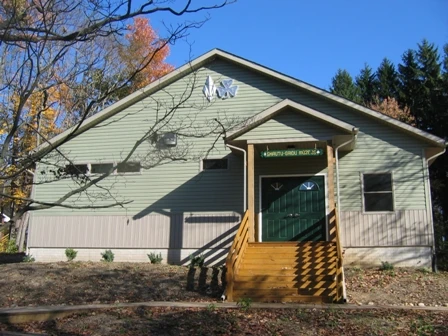
Administrācija / Staff





Latvian Center Garezers